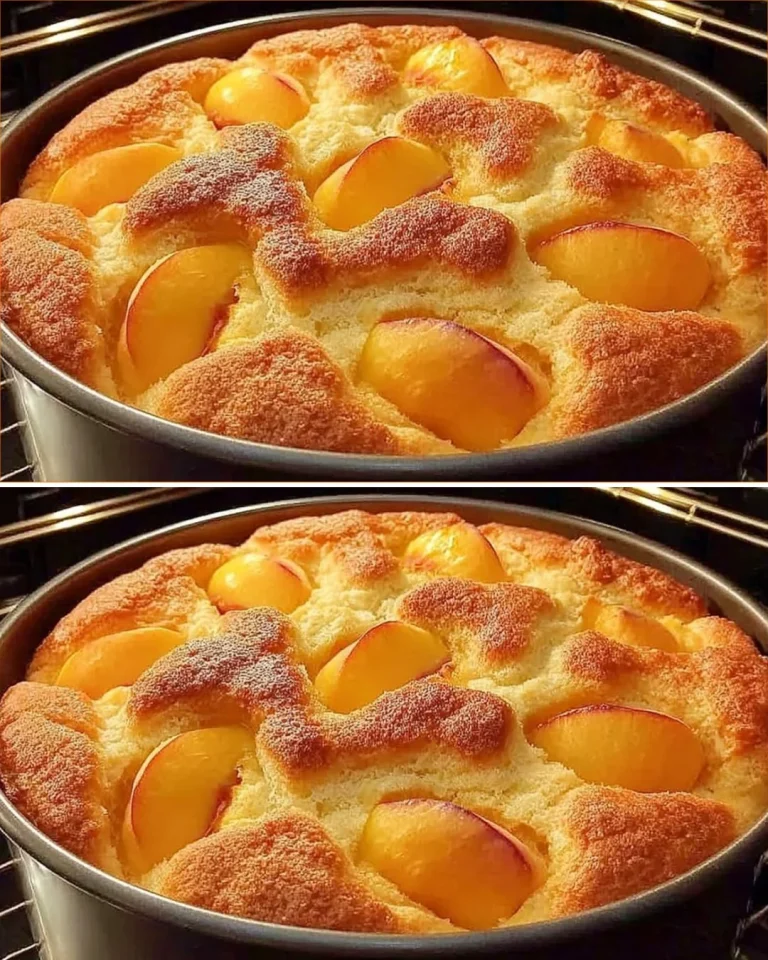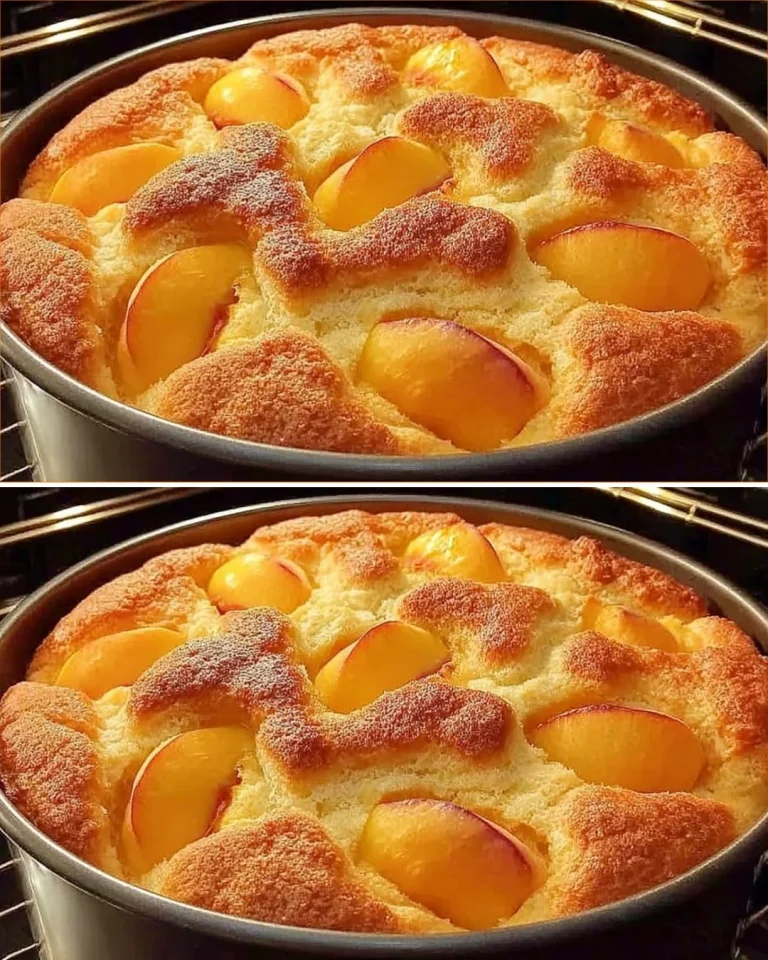
Peach season is such a treasure, especially when the fruit is sweet, juicy, and ripe enough to add natural sweetness and a touch of acidity to baked goods. This peach ricotta semolina cake strikes the perfect balance between tender and slightly grainy, thanks to the semolina, and the ricotta keeps the crumb moist and soft without being heavy. It’s not overly sweet, making it a lovely treat that feels fresh and light—ideal for afternoon tea or a simple dessert.
Letting the batter rest for a bit before baking really helps the semolina absorb moisture, ensuring the cake stays soft in the center even after baking. Adding lemon zest gives a subtle brightness that complements the peaches perfectly. Scattering extra peach pieces on top adds a lovely peek of juicy fruit once it’s baked, making it as pretty as it is delicious.
Why You’ll Love This Recipe
- Uses simple pantry staples but delivers a unique texture from semolina and ricotta.
- The peaches add natural sweetness and freshness—no need for heavy frosting.
- The soft center contrasts beautifully with the golden, lightly caramelized edges.
- No complicated techniques: just whisk, fold, rest, and bake.
- Resting the batter before baking improves texture and results in a moister cake.
- Can easily be adapted with other summer fruits like plums or nectarines.
Ingredients
- 1 1/2 cups (250 g) fine semolina
- 1 cup (250 g) ricotta cheese
- 2 large eggs
- 1/2 cup (100 g) granulated sugar
- 1/2 cup (120 ml) milk
- 2 ripe peaches, diced
- 1 1/2 teaspoons baking powder
- 1 teaspoon vanilla extract
- Finely grated zest of 1 lemon
Ingredient Notes
Fine semolina is key here—it gives that delicate grainy texture without being gritty. If you don’t have fine semolina, regular semolina can work but might make the cake a bit coarser. Ricotta adds moisture and a subtle tang, which balances the sweetness and keeps the cake from drying out. When choosing peaches, opt for ripe but firm fruit; overripe peaches can make the cake too wet. Fresh lemon zest brightens the flavor but don’t substitute with lemon extract, as it can be overpowering.
Kitchen Tools Needed
- 8-inch (20 cm) round cake pan
- Mixing bowls
- Whisk
- Rubber spatula
- Measuring cups and spoons
- Fine grater or zester
Step-by-Step Instructions
-
Preheat your oven to 350°F (180°C). Line an 8-inch (20 cm) round cake pan with parchment paper or lightly grease it to prevent sticking.
-
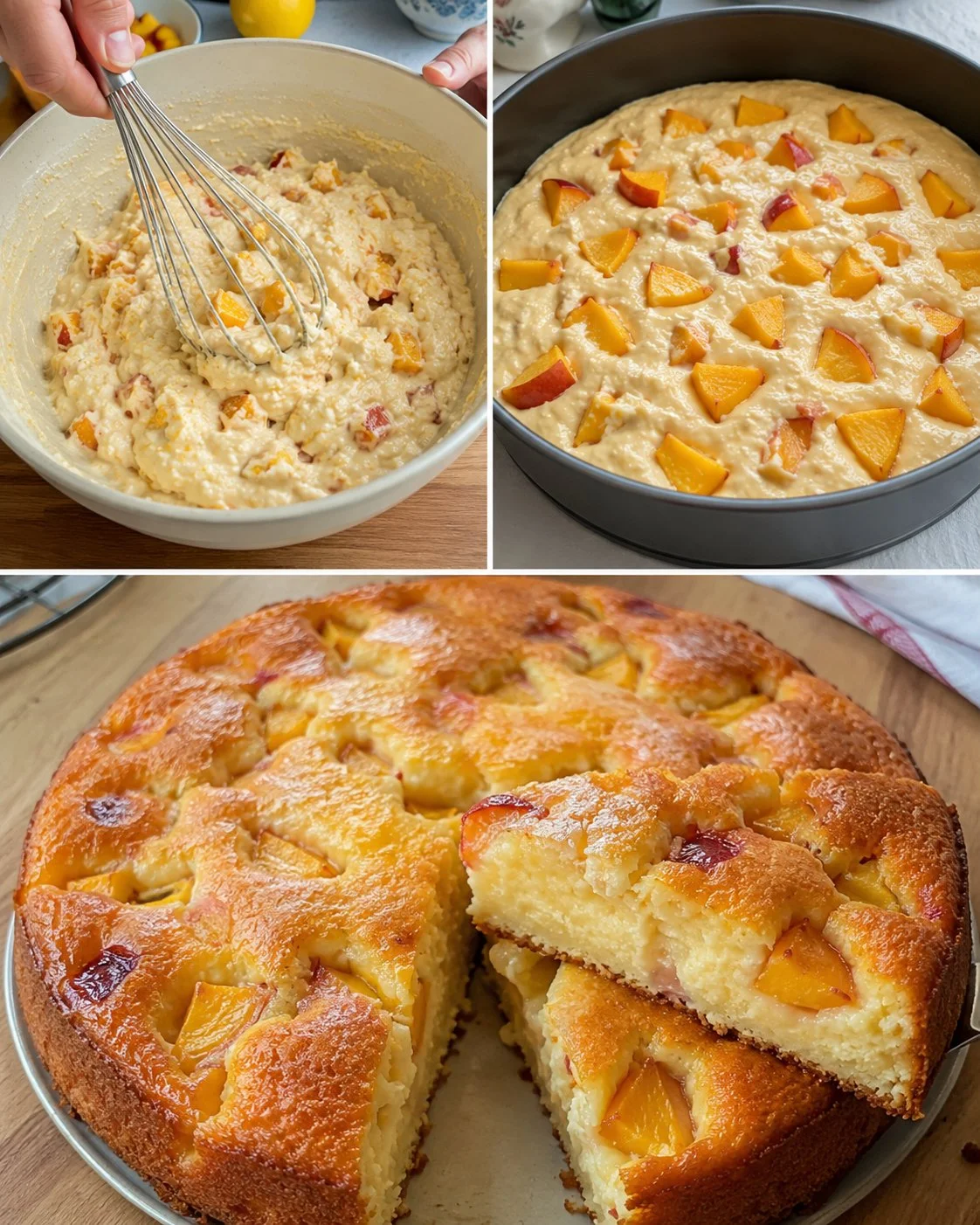
In a large bowl, whisk together the ricotta, eggs, sugar, milk, vanilla extract, and lemon zest until completely smooth and creamy. This step helps avoid lumps and ensures even distribution of flavors.
-
Stir in the fine semolina and baking powder until just combined. The batter will start to thicken slightly as the semolina absorbs moisture.
-
Fold in most of the diced peaches gently—reserve a handful to scatter on top of the cake before baking.
-
Spread the batter evenly into your prepared cake pan. Scatter the remaining peach pieces on top; they’ll caramelize slightly and add a nice pop of color and flavor.
-
Let the batter rest for 10 minutes at room temperature. This step is crucial—it allows the semolina to hydrate properly, resulting in a tender yet softly set center.
-
Bake the cake for 38 to 43 minutes, until the edges turn golden brown and a toothpick inserted in the center comes out mostly clean but with a few moist crumbs. Don’t overbake, or the cake will dry out.
-
Remove from the oven and let the cake cool in the pan for about 15 minutes before transferring it to a wire rack to cool completely.
Pro Tips
- Make sure the peaches are diced into similar-sized chunks for even distribution and baking.
- Resting the batter before baking really makes a difference in texture—the cake holds moisture better and won’t be dense.
- Check the cake starting at 38 minutes to avoid overbaking; because of the peaches’ moisture, baking time can vary slightly.
- Use fresh lemon zest rather than bottled for the best brightness.
- If your ricotta is very watery, drain it slightly through a fine sieve or cheesecloth for a firmer texture.
Common Mistakes
- Skipping the batter rest results in a drier, less tender crumb.
- Overmixing after adding semolina can develop gluten and make the cake tough. Mix just until combined.
- Baking too long will dry out the center, losing the soft, custard-like texture.
- Using underripe peaches leads to less flavor and a less juicy cake.
- Not greasing or lining the pan properly can cause the cake to stick and break when removing.
Variations
- Replace peaches with nectarines, plums, or even berries for seasonal spins.
- Add a handful of toasted almonds or pistachios on top for extra crunch.
- Stir in a tablespoon of orange zest instead of lemon for a slightly different citrus note.
- Dust with powdered sugar or serve with a dollop of lightly sweetened whipped cream or Greek yogurt.
Serving Suggestions
This cake shines on its own or paired with a simple scoop of vanilla ice cream, fresh whipped cream, or a drizzle of honey. It’s good warm but also delightful at room temperature with a cup of tea or coffee.
Storage Instructions
Store leftovers covered tightly at room temperature for up to 2 days, or wrapped in plastic wrap and refrigerated for up to 4 days. Allow the cake to come to room temperature before serving if chilled.
Reheating Tips
To enjoy the cake warm, heat individual slices in the microwave for about 15-20 seconds. This revives the soft center without drying the edges.
Nutrition Estimate (per serving, based on 8 servings)
- Calories: 230 kcal
- Protein: 7 g
- Carbohydrates: 30 g
- Fat: 7 g
Recipe Summary
- Prep Time: 15 minutes
- Cook Time: 38–43 minutes
- Total Time: About 1 hour (including resting)
- Servings: 8
- Cuisine: Mediterranean-inspired, home baking
- Course: Dessert or snack
- Calories: 230 per serving
Frequently Asked Questions
Can I use regular wheat flour instead of semolina?
You can, but the texture will be different. Semolina gives a unique grainy feel and dense crumb, while wheat flour results in a lighter, more traditional cake.
What if I only have frozen peaches?
Thaw and drain them well so the batter doesn’t get too watery, which can affect baking time and texture.
Can this cake be made dairy-free?
Try substituting the ricotta with a plant-based ricotta or a firm silken tofu and use a dairy-free milk alternative. The texture might slightly differ.
Is it okay to double the recipe?
Yes, but bake in a larger pan or use two pans and adjust baking time accordingly. Check doneness with a toothpick as usual.
Why does the batter need to rest before baking?
Resting lets the semolina absorb moisture fully, resulting in a more tender, custardy crumb with a soft center rather than dry or crumbly cake.
This peach ricotta semolina cake is a lovely change from the usual fruit cakes and muffins, offering a delicate texture and straightforward method. It’s approachable yet special enough for guests or to enjoy any time peach cravings hit.