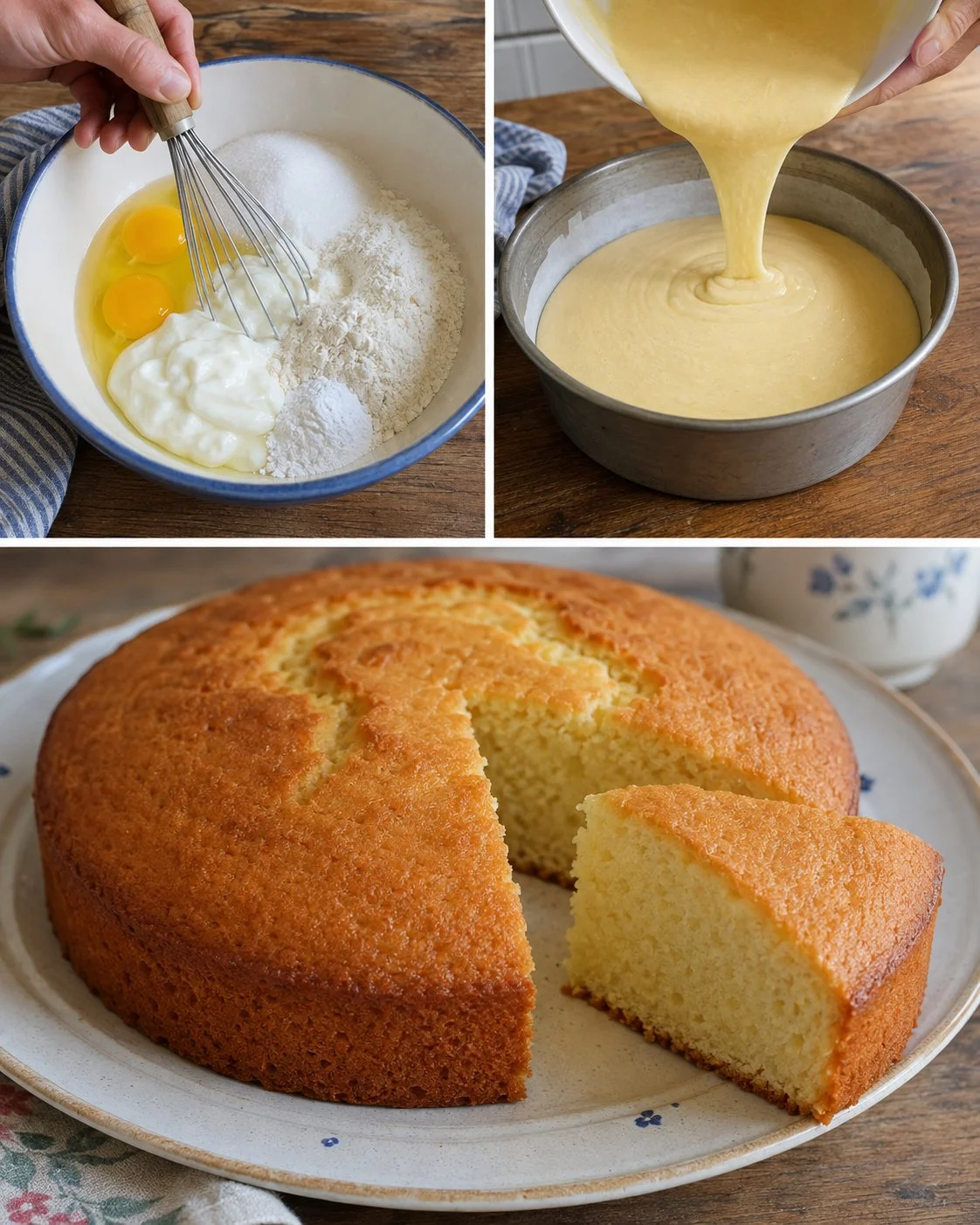
This quick yogurt cake is the kind of everyday bake you can pull together with pantry basics, then dress up with lemon zest, coconut, and pistachios so it feels special. It bakes up moist and tender thanks to the yogurt and oil, but it’s still very much a sweet cake—so it’s best enjoyed as an occasional treat (and not the most suitable choice for anyone strictly managing sugar intake). If you like yogurt-based baking, you might also enjoy these no-flour yogurt and semolina pancakes for a faster, skillet-style option.
This recipe is especially good for home bakers who want a reliable “mix and bake” cake without creaming butter or hauling out a stand mixer. The batter should look thick but pourable; once it’s in the pan, the coconut and pistachios create a toasty topping that gives you texture even if you serve it plain.
Why This Recipe Is Helpful
- Uses simple ingredients you may already have (eggs, yogurt, flour, oil).
- Yogurt keeps the crumb soft and moist for days, not just the first afternoon.
- Lemon zest and juice brighten the flavor so it doesn’t taste flat or overly sweet.
- No complicated techniques—just whisk, stir, and bake.
- Coconut and pistachios add crunch and make it look “bakery-style” with almost no extra work.
- Easy to pack for lunchboxes or slice for casual guests.
Who This Recipe Is Best For
This is a great cake for anyone who wants a straightforward homemade dessert: busy families, newer bakers, or anyone who prefers lighter-tasting cakes (lemony, not heavy chocolate). It’s also a nice option when you need something that travels well—this slices cleanly once cooled and doesn’t require frosting.
Who Should Be Careful
- People managing blood sugar: this cake contains a noticeable amount of sugar and refined flour, so it’s better as an occasional treat and in modest portions.
- Nut allergies: pistachios are a real risk—skip them or replace with a safe topping if needed.
- Coconut dislike or sensitivity: the coconut flakes are noticeable on top; you can omit them, but the topping will be less crunchy.
- Anyone avoiding dairy: yogurt is central here (though you can experiment with non-dairy yogurt—see notes below).
Ingredients
- 3 large eggs
- Pinch of salt
- 3/4 cup (150 g) sugar
- 1 teaspoon vanilla extract (or a small pinch of vanilla powder)
- 1/2 cup (120 ml) neutral oil (canola, sunflower, or light olive oil)
- 1 cup (240 g) plain yogurt (whole milk or low-fat)
- 1 tablespoon lemon zest (from 1–2 lemons)
- 2 tablespoons (30 ml) lemon juice
- 2 1/3 cups (300 g) all-purpose flour
- 1 tablespoon baking powder (15 g)
- 2–3 tablespoons (15–20 g) coconut flakes, for topping
- 2–3 tablespoons (20–30 g) chopped pistachios, for topping
Ingredient Notes
- Yogurt: Plain yogurt gives moisture and a gentle tang. Whole milk yogurt makes a slightly richer crumb; low-fat works too, just a touch less tender. If using Greek yogurt, thin it with 1–2 tablespoons water or milk so the batter isn’t overly thick.
- Oil: Oil keeps the cake moist even after chilling. Choose a neutral oil so the lemon stays front and center.
- Lemon zest vs. juice: Zest brings most of the lemon aroma; juice brings brightness. Don’t skip the zest if you want that “grandma cake” flavor.
- Baking powder: Measure carefully. Too little = dense cake; too much = a bitter edge and a domed, cracked top.
- Pistachios/coconut: Both toast in the oven. If your coconut browns fast in your oven, use larger flakes or sprinkle halfway through baking.
Kitchen Tools Needed
- Mixing bowl
- Whisk
- Fine grater or microplane (for zest)
- Measuring cups/spoons or kitchen scale
- Sifter or fine-mesh sieve (helpful for flour + baking powder)
- 9.5-inch (24 cm) round cake pan
- Parchment paper
- Cooling rack
Step-by-Step Instructions
- Preheat the oven to 350°F (175°C). Position a rack in the middle.
- Prep the pan: Line a 9.5-inch (24 cm) cake pan with parchment paper (bottom at minimum). Lightly grease the sides if you like extra insurance.
- Whisk the base: In a large bowl, whisk the eggs with a pinch of salt, sugar, and vanilla for about 1–2 minutes, until the mixture looks lighter and a bit foamy.
- Add the wet ingredients: Whisk in the oil, yogurt, lemon zest, and lemon juice until smooth. The batter will smell very lemony at this point—perfect.
- Add dry ingredients gradually: Sift (or whisk together) the flour and baking powder, then add to the bowl in 2–3 additions. Stir gently until you don’t see dry flour. Stop once combined; over-mixing can make the cake a bit tough.
- Fill the pan: Pour the batter into the prepared pan and smooth the top.
- Add the topping: Sprinkle coconut flakes and chopped pistachios evenly over the surface.
- Bake for 35–40 minutes, or until the cake is golden and a toothpick inserted in the center comes out clean (a couple of moist crumbs are fine; wet batter is not).
- Cool properly: Let the cake cool in the pan for 10–15 minutes, then lift out (or turn out) and cool completely on a rack before slicing. It cuts much cleaner once fully cooled.
Pro Tips
- Room temp eggs mix more smoothly, but cold eggs still work—just whisk a little longer.
- Zest first, then juice the lemon. It’s much easier than trying to zest a squeezed lemon.
- Watch the top color at 30 minutes: if the coconut is browning too quickly, loosely tent the cake with foil for the remaining bake time.
- Don’t rush slicing: warm yogurt cake can seem “gummy” even when baked through; it sets as it cools.
- For neat slices, use a serrated knife and wipe between cuts.
Healthier or Lighter Swaps
- Reduce the sugar slightly: try 2/3 cup (130 g) sugar instead of 3/4 cup (150 g). The cake will be a little less sweet but still nicely flavored with lemon.
- Use part whole-wheat flour: swap in up to 1 cup (120 g) whole-wheat flour for a slightly heartier crumb (expect it to be a touch denser).
- Choose lower-fat yogurt: works fine and trims some richness (texture stays tender because of the oil).
- Go lighter on the topping: use just pistachios or just coconut to reduce extra calories while keeping crunch.
Common Mistakes
- Over-mixing after adding flour, which can make the cake tighter and less fluffy.
- Incorrect baking powder measurement (too much can taste bitter; too little can make it heavy).
- Using a pan much smaller than 24 cm/9.5 inches, which can cause overflow or an underbaked center.
- Cutting while hot, leading to a sticky-looking crumb and crumbling slices.
Variations
- Orange version: swap lemon zest/juice for orange zest/juice; keep pistachios for a classic pairing.
- Berry add-in: fold in 1 cup (150 g) fresh berries (or 1 cup/130 g frozen, tossed with 1 teaspoon flour) before baking.
- Almond topping: replace pistachios with sliced almonds (avoid if nut allergies apply).
- Spiced lemon: add 1/2 teaspoon ground cardamom or cinnamon to the dry ingredients for a warmer flavor.
Serving Suggestions
Serve slices plain with tea or coffee, or add a spoonful of extra yogurt and fresh fruit on the side to make it feel a bit more balanced. If you want it more dessert-like, a light dusting of powdered sugar is enough—this cake doesn’t need frosting.
Storage Instructions
- Store cooled cake covered at room temperature for up to 2 days.
- For longer storage, refrigerate (well wrapped) for up to 5 days.
- Freeze slices wrapped individually for up to 2 months; thaw at room temperature.
Reheating Tips
This cake is perfectly fine at room temperature. If you like it warm, heat a slice for 10–15 seconds in the microwave—just enough to take the chill off without making the topping soft.
Nutrition Estimate
Per serving (1/10 of the cake), estimates will vary by ingredients and portion size:
- Calories: ~320 kcal
- Protein: ~6 g
- Carbs: ~40 g
- Fat: ~16 g
Recipe Summary
- Prep Time: 10 minutes
- Cook Time: 35–40 minutes
- Total Time: 50–60 minutes (including cooling time before slicing)
- Servings: 10
- Cuisine: Home-style / European-inspired
- **