Starting your own sourdough starter is not only a rewarding endeavor but also a sustainable choice that minimizes food waste. With just a few simple ingredients, you can cultivate this living culture that enhances the flavor and texture of your baked goods. The process of nurturing your starter is akin to coaxing a delicate ecosystem into life. As you feed your starter with flour and water, it comes alive, bubbling with yeasty goodness, ready to transform your bread-making game. The love and care involved in managing a sourdough starter will not only result in delicious loaves but will also connect you to a time-honored culinary tradition. Whether you’re a seasoned baker or just dipping your toes into the world of fermentation, this zero-waste sourdough starter system is perfect for anyone looking to embrace the art of homemade bread.
Why You’ll Love This Recipe
- Simple Ingredients: Just three components are needed to create your starter.
- Zero Waste: Utilizes kitchen scraps and refreshes without any waste.
- Flavor Development: Cultivating a starter enhances the depth of flavor in your baked goods.
- Community and Tradition: Join a vibrant community that values homemade, sustainable cooking.
- Customizable: You can tailor your starter based on the flour you choose, allowing for endless creativity.
Ingredients
- 50g sourdough starter (seed) (about 1.75 oz)
- 75g flour (white or whole wheat) (about 2.5 oz or 0.6 cups)
- 75g room temperature water (about 2.6 oz or 5 tablespoons)
Ingredient Notes
- Sourdough Starter (Seed): This is the initial culture that you keep in the fridge. If you don’t have one, you can make your own from scratch.
- Flour: Use either all-purpose flour or whole wheat flour based on your flavor preference and nutritional needs.
- Water: Ensure your water is at room temperature to encourage fermentation activity.
Kitchen Tools Needed
- Clean glass or plastic jar (with a lid or cloth cover)
- Kitchen scale (for precise measurements)
- Spatula or spoon for mixing
- Permanent marker (for marking levels)
Step-by-Step Instructions
- Begin with your dormant sourdough starter from the fridge, measuring out 50g into a clean jar.
- Add 75g of flour to the starter in the jar.
- Pour in 75g of room-temperature water. Stir the mixture thoroughly until no dry flour remains, creating a smooth, homogenous batter.
- Using a permanent marker, mark the level of the mixture on the jar.
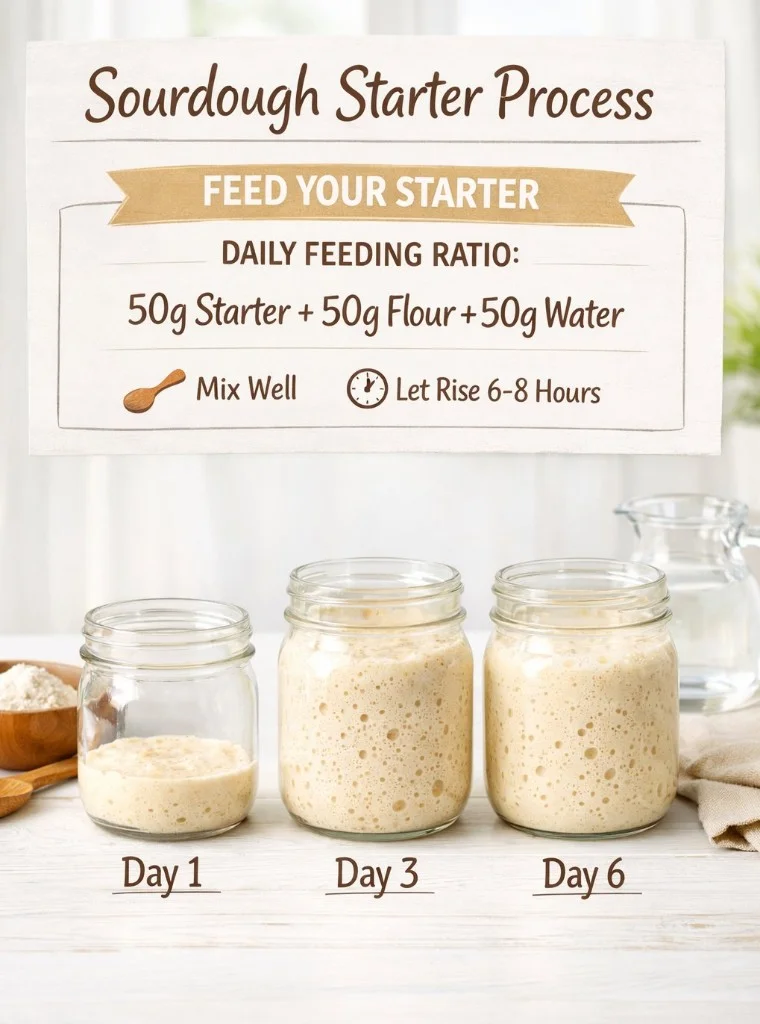
- Cover the jar loosely with a lid or cloth to allow airflow, then let it sit at room temperature between 24–27°C (75–80°F) for about 4 to 7 hours, or until it has doubled in size and is bubbly.
- Once your starter is active, use 150g for your baking needs, and return the remaining 50g back to the fridge as your seed for the next baking session.
Cooking Tips
- Keep your starter in a warm spot, away from drafts, to promote optimal growth.
- If using whole wheat flour, your starter may become more vigorous due to higher nutrient content.
- Make sure to feed your starter once a week while stored in the fridge to keep it healthy.
- Use filtered water if your tap water contains chlorine, which can inhibit yeast activity.
- Always use a clean utensil to prevent contamination.
Variations
- Multi-Grain Starter: Try using a blend of different flours like rye, spelt, or barley for a unique flavor profile.
- Herbed Starter: Infuse the mixture with dried herbs to give your breads an extra kick.
- Sweet Starter: Mix in a small amount of honey or sugar during feeding for a slightly sweet flavor in your bread.
- Gluten-Free Starter: Experiment with gluten-free flours such as brown rice or buckwheat.
Serving Suggestions
This sourdough starter is best used in a range of bread recipes including classic sourdough loaves, pancakes, and even pizza dough. Serve your freshly baked bread with homemade butter or a selection of jams for a delightful experience.
Storage Instructions
To store your sourdough starter, keep it in a clean glass jar with a lid or cloth over the top in the refrigerator. Make sure to feed it regularly every week to keep it active and healthy.
Reheating Tips
If your starter has been in the fridge for a while, revive it by bringing it to room temperature and feeding it 1 part starter, 1.5 parts flour, and 1.5 parts water before using.
Nutrition Estimate
Per serving (with 150g of active starter):
- Calories: 96
- Protein: 3g
- Carbohydrates: 19g
- Fat: 0.3g
Recipe Summary Card
- Prep Time: 20 minutes
- Cook Time: N/A
- Total Time: 4–7 hours (including rise time)
- Servings: Makes enough active starter for multiple recipes
- Cuisine: Bakery
- Course: Baking
- Calories: 96
Frequently Asked Questions
-
How often should I feed my sourdough starter?
- You should feed it at least once a week if kept in the fridge.
-
How do I know if my starter is ready to use?
- Your starter should double in size and be bubbly, indicating it is active and ready for baking.
-
Can I use different types of flour?
- Yes, you can use various types of flour; just keep in mind that whole grain flours may create a more vigorous starter.
-
Why is my starter not bubbling?
- This could be due to environmental factors like temperature or using water with chlorine. Ensure your starter is at an optimal temperature and using non-chlorinated water.
-
How do I make my starter stronger?
- Regular feeding and using a mixture of flours can help strengthen your starter.
Conclusion
Creating your own sourdough starter is not just about baking; it’s a journey that connects you to a rich culinary heritage while embracing a zero-waste philosophy. By nurturing this living culture, you’re not only enhancing your baking but also engaging in a sustainable practice that benefits both you and the environment. Enjoy the process and the delicious results that come from it!
Sourdough Starter
Cultivate a simple, zero-waste sourdough starter with just three ingredients for delicious homemade bread.
Main Ingredients
- 50 g sourdough starter (seed) (This is the initial culture kept in the fridge.)
- 75 g flour (white or whole wheat) (Use based on your flavor preference.)
- 75 g room temperature water (Ensure water is at room temperature for fermentation.)
Preparation
- Begin with your dormant sourdough starter from the fridge, measuring out 50g into a clean jar.
- Add 75g of flour to the starter in the jar.
- Pour in 75g of room-temperature water. Stir the mixture thoroughly until no dry flour remains.
- Using a permanent marker, mark the level of the mixture on the jar.
- Cover the jar loosely with a lid or cloth and let it sit at room temperature for about 4 to 7 hours.
- Once the starter has doubled in size and is bubbly, use 150g for your baking needs, and return the remaining 50g to the fridge.
Keep your starter in a warm spot, away from drafts. Feed it once a week while stored in the fridge. Use filtered water if your tap water contains chlorine.