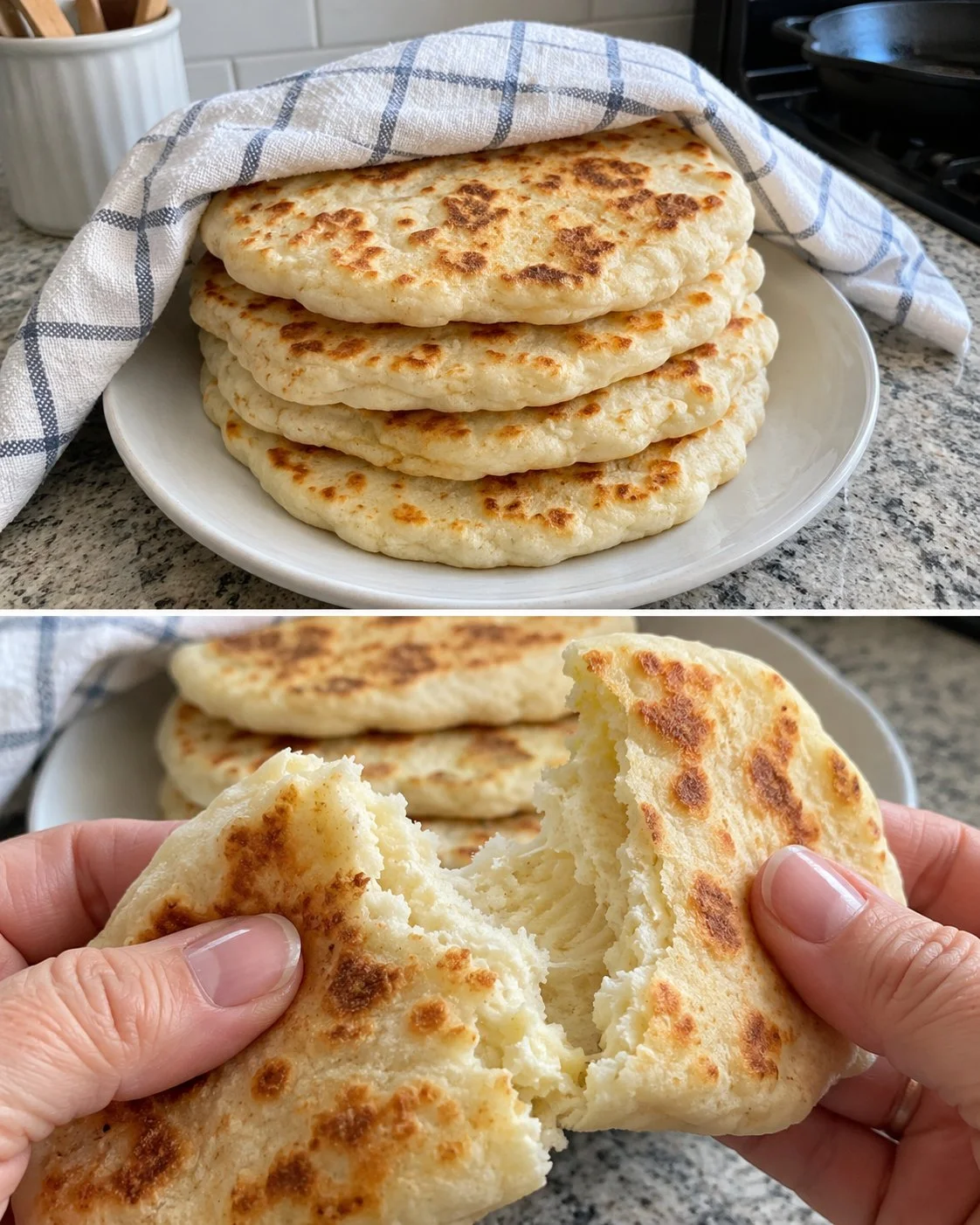
Two-ingredient Greek yogurt flatbreads are a simple and quick recipe perfect for a light lunch or snack. Made from just self-rising flour and thick Greek yogurt, these flatbreads are soft, mildly tangy, and versatile for various fillings or toppings. Anyone seeking an easy homemade bread alternative with protein-rich ingredients will appreciate this recipe. Since the flatbreads rely on yogurt instead of yeast or baking powder, they offer a convenient option that doesn’t require waiting time. For a similarly quick and comforting homemade dish, you might also enjoy 10-minute rice and zucchini patties.
Why This Recipe Is Helpful
- Uses only two common ingredients for a fast, no-fuss dough
- No yeast or rising time needed, ideal for busy days
- Can be cooked quickly on the stovetop without an oven
Best For
This recipe suits home cooks who want fresh bread without complex preparation. It’s great for vegetarians and anyone looking for a light, easy carb boost.
Be Careful If
Since it contains dairy, it may not be suitable for people with lactose intolerance or dairy allergies. The self-rising flour includes leavening and salt, so extra salt is unnecessary.
Ingredients
- 1 cup (125 g) self-rising flour, plus extra for dusting
- 1 cup (240 g) thick plain Greek yogurt
- 1 teaspoon olive oil for cooking
Ingredient Notes
- Self-rising flour: Contains baking powder and salt; don’t add more leavening or salt separately.
- Greek yogurt: Provides moisture and tang; use thick yogurt for best dough texture. Greek-style yogurt types work well.
- You can substitute regular plain yogurt if thickened (e.g., strained) but results may vary.
Kitchen Tools Needed
- Mixing bowl
- Rolling pin
- Non-stick skillet or frying pan
- Clean kitchen towel
Step-by-Step Instructions
- In a mixing bowl, combine the self-rising flour and Greek yogurt. Stir with a spoon until a shaggy dough forms.
- Turn the dough onto a lightly floured surface. Knead gently for 2–3 minutes until the dough is smooth and elastic. Add small amounts of flour (a teaspoon at a time) if the dough is too sticky.
- Divide the dough into 4 equal balls. Using a rolling pin, roll each ball into a thin circle about 6 inches (15 cm) in diameter. Aim for an even thickness to ensure consistent cooking.
- Heat a non-stick skillet over medium-high heat. Lightly wipe the skillet with a teaspoon of olive oil.
- Cook each flatbread for 1–2 minutes on one side until you see puffed bubbles and light golden spots. Flip and cook the other side similarly. The flatbread should feel soft but cooked through.
- Stack the cooked flatbreads under a clean kitchen towel to keep them warm and soft until serving.
Pro Tips
- Don’t over-knead the dough to keep it tender; 2–3 minutes is enough.
- Keep the skillet hot but not smoking to get nice brown spots without burning.
- Rolling dusting flour helps prevent sticking but use sparingly to avoid tough edges.
- Cover the cooked bread immediately; they soften better under a towel.
Lighter Swaps
The original recipe is quite simple and light already. Using non-fat Greek yogurt can reduce fat content but may slightly alter texture. Avoid substituting self-rising flour if you want to keep the convenience and rise.
Common Mistakes
- Adding too much extra flour during kneading can make flatbreads dry and tough.
- Under-cooking leads to a doughy inside; ensure golden spots appear before flipping.
- Rolling uneven flatbreads causes some parts to cook faster and burn while others remain raw.
Serving Suggestions
Serve warm flatbreads with dips, fresh salads, grilled veggies, or as wraps for sandwiches. They also pair well with Mediterranean foods like hummus or tzatziki.
Storage Instructions
Store leftover flatbreads in an airtight container or zip bag at room temperature for up to 2 days. For longer storage, freeze them separated by parchment paper for up to one month.
Reheating Tips
Reheat gently in a warm skillet over medium heat for 30 seconds per side or briefly in a microwave wrapped in a damp kitchen towel to restore softness.
Nutrition Estimate
- Calories: Approximately 150 kcal per flatbread
- Protein: 7 g
- Carbohydrates: 22 g
- Fat: 3 g
Values are estimates and may vary by ingredients and portion size.
Recipe Summary
- Prep Time: 5 minutes
- Cook Time: 8 minutes
- Total Time: 13 minutes
- Servings: 4 flatbreads
- Cuisine: Mediterranean-inspired
- Course: Light lunch or snack
- Calories: ~150 kcal per serving
Frequently Asked Questions
Can I use regular flour instead of self-rising flour?
You can, but you’ll need to add 1 ½ teaspoons baking powder and a pinch of salt to mimic self-rising flour.
Is it necessary to use Greek yogurt?
Greek yogurt’s thickness helps the dough hold together. Regular yogurt can work if strained to remove excess liquid.
Can I make these flatbreads in advance?
Yes, cook them and store in the fridge, then reheat before serving. They are best eaten fresh but keep well for a day or two.
Conclusion
This two-ingredient Greek yogurt flatbread recipe is a fantastic quick-fix bread alternative bursting with simple, wholesome flavors. It’s especially ideal when you want homemade bread without fuss or time. Soft, easy, and adaptable, it’s worth keeping in your regular cooking repertoire.