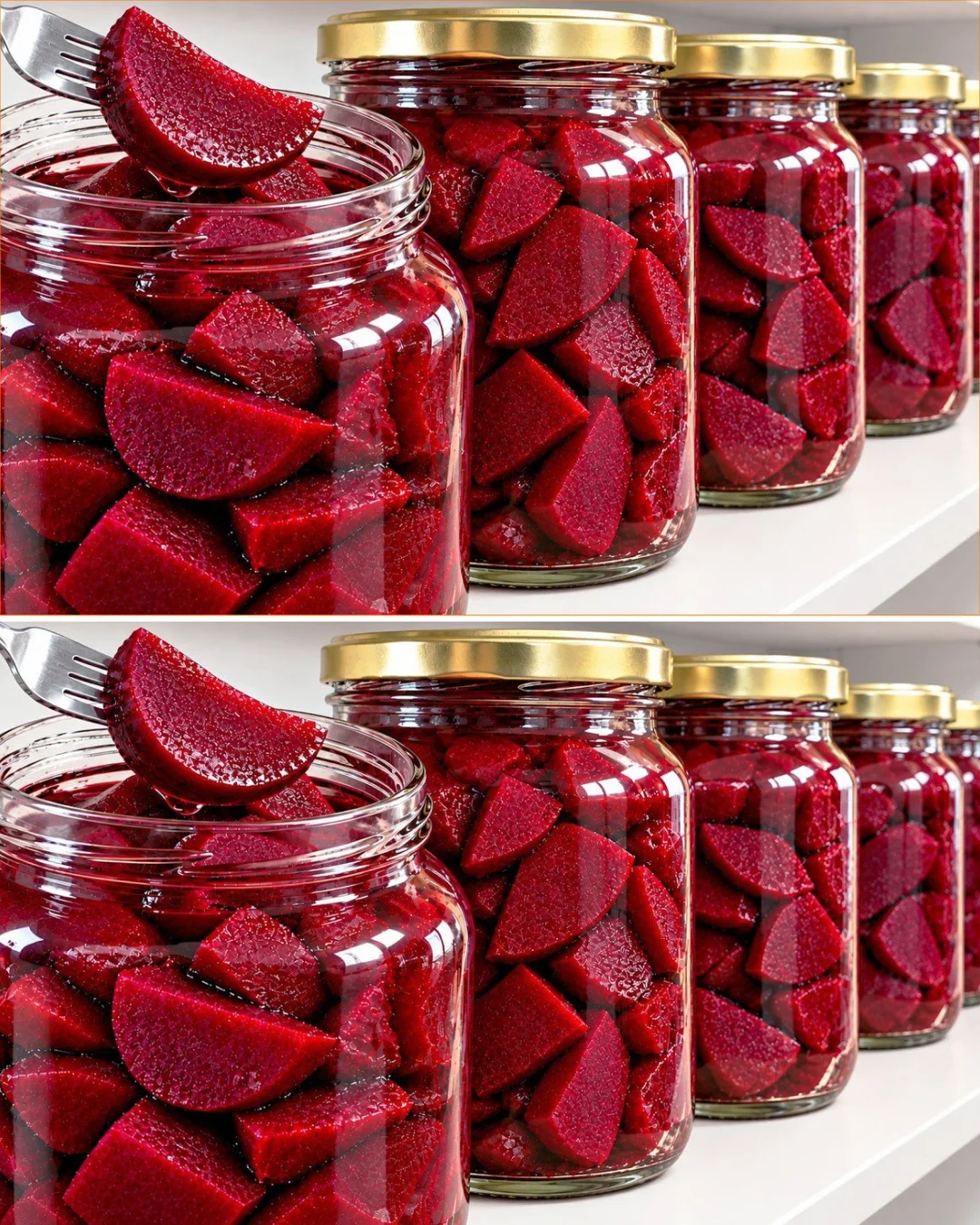
Pickling beets in jars without refrigeration is a time-honored way to preserve their sweet, earthy flavor for months or even years. This method uses simple ingredients: vinegar, salt, sugar, and water, combined with the natural firmness of boiled beets. It’s ideal for those who want to enjoy beets year-round without relying on a fridge or modern preservatives. Besides extending shelf life, pickled beets offer a nutritious side or salad addition, rich in fiber, vitamins, and antioxidants. If you’re interested in traditional preservation techniques, this approach complements other clever food-storage methods like the Amish way of keeping watermelon fresh without refrigeration.
Why This Recipe Is Helpful
- Allows long-term storage of beets without refrigeration or chemical preservatives.
- Simple ingredients and equipment that most home cooks have on hand.
- Produces a versatile, flavorful jar of pickled beets that enhance many meals.
Best For
This recipe suits anyone who wants to preserve seasonal beets easily, especially those without access to consistent refrigeration or who appreciate homemade, natural food preservation.
Be Careful If
If you are watching your sodium intake, note that this recipe contains salt. Also, the sugar content is modest but worth considering for diabetic diets or very low-sugar plans.
Ingredients
- 2 kg (4.4 lb) beets
- 1 liter (4¼ cups) water
- 250 ml (1 cup) 9% vinegar OR 500 ml (2 cups) 5% vinegar
- 1 tablespoon salt
- 1 tablespoon sugar
Ingredient Notes
- You can use either the stronger 9% vinegar at half the volume or twice as much mild 5% vinegar; both work to preserve effectively.
- Choose fresh, firm beets with smooth skins for the best texture and taste.
- Sugar balances the acidity and enhances the natural sweetness of the beets without overpowering.
Kitchen Tools Needed
- Large pot for boiling beets
- Knife and peeler
- Clean glass jars with lids suitable for canning
- Deep pot for water bath pasteurizing
- Kitchen cloth to cushion jars during pasteurization
Step-by-Step Instructions
- Thoroughly wash the beets to remove any dirt or debris. Place them in a large pot.
- Cover the beets completely with water and bring to a boil. Simmer for about 1 hour until a knife easily pierces the beet but the center remains firm to the touch.
- Remove beets from water and allow to cool until safe to handle.
- Prepare the pickling liquid by combining water, vinegar, salt, and sugar in a pot. Heat gently, stirring until the salt and sugar are dissolved, then remove from heat.
- Peel the cooled beets; the skins should slip off easily. Slice the beets into rounds or halves if large, aiming for uniform pieces to fit neatly into jars.
- Fill sanitized jars with sliced beets, leaving some headspace at the top.
- Pour the warm pickling liquid over the beets until completely covered.
- Wipe jar rims clean and seal jars with lids.
- Place a clean kitchen cloth in the bottom of a deep pot to prevent jars from cracking. Arrange jars on the cloth and fill the pot with water to cover jar lids.
- Bring to a boil and maintain for 30 minutes to pasteurize and seal.
- Carefully remove jars and let cool undisturbed. Check that lids are sealed by pressing the center; it should not flex.
- Store jars in a cool, dark place away from direct sunlight. No refrigeration is needed.
Pro Tips
- Avoid overcooking beets; they should be tender but not mushy to maintain good texture in the jar.
- Use sterilized jars and lids to prevent spoilage and ensure a proper seal.
- Let jars cool completely before checking seals to avoid false readings.
- Use a kitchen cloth or rack under jars during pasteurization to prevent breakage from direct heat.
Lighter Swaps
This recipe is already light and natural. Omitting sugar could reduce sweetness but may impact the flavor balance and preservation slightly, so it is not recommended.
Common Mistakes
- Boiling beets too long resulting in mushy pickled beets.
- Not properly sterilizing jars can lead to spoilage.
- Skipping the water bath pasteurization risks seal failure and unsafe storage.
Serving Suggestions
Pickled beets are excellent as a side dish, tossed in salads, or served with cheese plates. They add color and a tangy crunch to any meal.
Storage Instructions
Store sealed jars in a cool, dark place such as a pantry or cellar. Once opened, keep refrigerated and consume within one week.
Reheating Tips
Pickled beets are best served cold or at room temperature. Reheating is unnecessary and may alter their texture and flavor.
Nutrition Estimate
Per serving (approx. 100g):
- Calories: 40 kcal
- Protein: 1 g
- Carbohydrates: 9 g
- Fat: 0 g
Values are estimates and may vary by ingredients and portion size.
Recipe Summary
- Prep Time: 15 minutes
- Cook Time: 1 hour
- Total Time: 1 hour 15 minutes plus cooling and pasteurization
- Servings: About 8 cups of pickled beets
- Cuisine: Traditional Preserved Foods
- Course: Side dish or condiment
- Calories: 40 kcal per 100 g serving
Frequently Asked Questions
Can I use canned vinegar instead of fresh?
Yes, as long as the vinegar is food-grade and the acidity matches the recipe requirements (5% or 9%), it will preserve safely.
How long do these pickled beets last without refrigeration?
Properly sealed and stored jars can last for months and even up to a few years, depending on storage conditions.
Can I add spices or herbs to the pickling liquid?
Yes, you can experiment with cloves, peppercorns, or bay leaves for extra flavor, but keep the basic preservation ingredients as stated.
Conclusion
This classic method of pickling beets in jars without refrigeration offers a simple, reliable way to enjoy this nutritious vegetable year-round. Its natural ingredients and long shelf life make it a wonderful pantry staple that’s both practical and delicious.