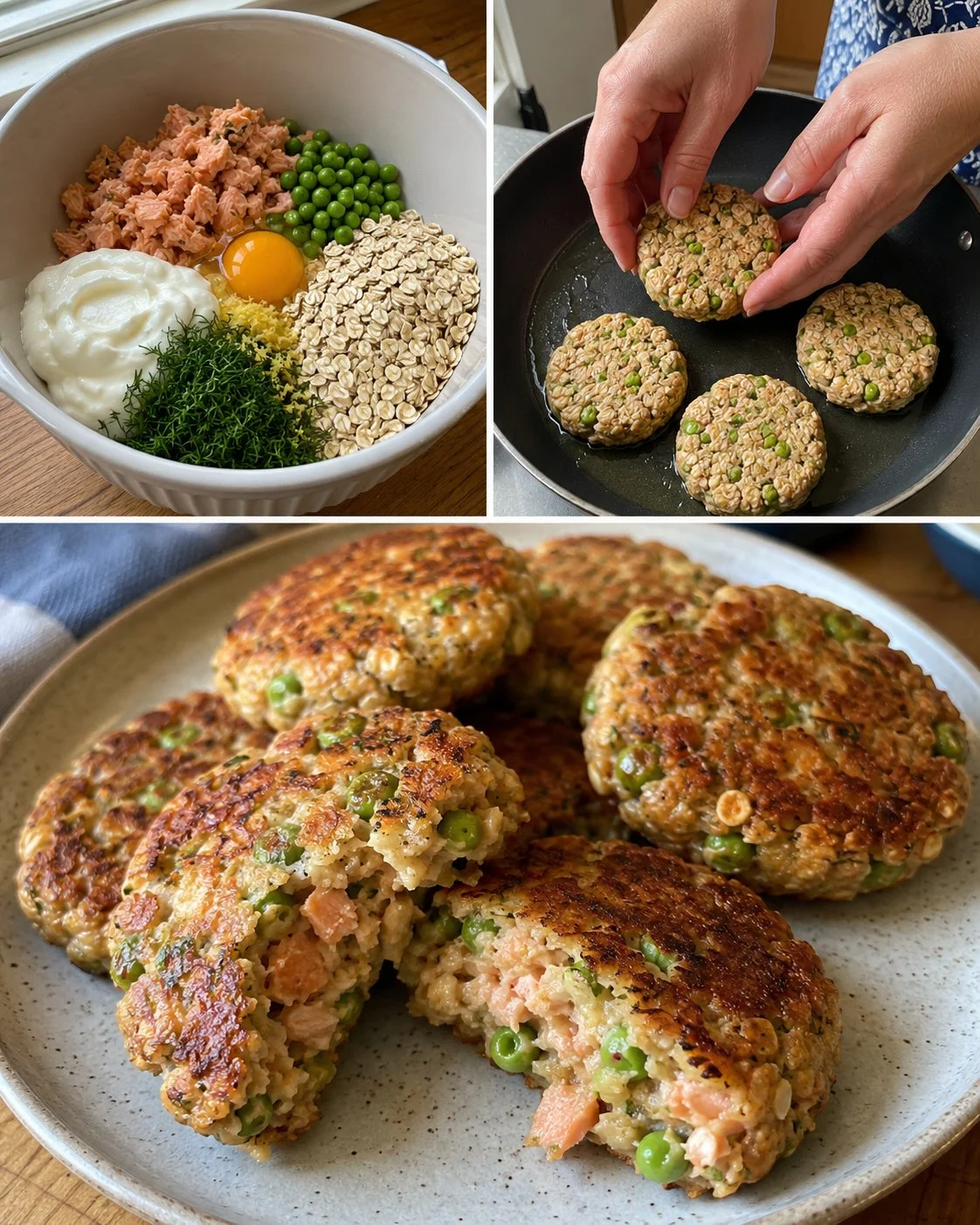
There are days when you want a quick, wholesome meal that doesn’t require a long ingredient list or complicated prep. These salmon and green pea oat cakes fit the bill perfectly—using pantry staples and a handful of fresh or thawed ingredients, you can have a satisfying dinner ready in under 30 minutes. The combination of canned salmon and green peas keeps the cakes light yet protein-packed, while quick oats provide just the right amount of binding without weighing them down. Adding a touch of yogurt and lemon juice brightens the flavor and helps keep the cakes moist. Cooking these in a skillet gives a lovely crisp outside, but baking is an easy, hands-off alternative that works just as well. I’ve found that letting the mixture rest for about 10 minutes before shaping helps the oats soften a bit, improving the texture and making the cakes hold together nicely.
Why You’ll Love This Recipe
- Uses simple pantry staples and frozen peas for convenience
- Quick and straightforward cooking method with skillet or oven options
- Balanced flavor with fresh herbs, lemon, and garlic powder—a subtle brightness
- Light yet filling, perfect for a casual lunch or dinner
- Resting the mixture before cooking improves texture and keeps cakes intact
- Can be easily doubled or halved depending on your needs
Ingredients
- 2 cans (5 oz/142 g each) salmon, drained
- 1 cup (150 g) thawed green peas
- 1 large egg
- 3/4 cup (70 g) quick oats
- 2 tablespoons (30 g) plain yogurt
- 1 tablespoon lemon juice
- 2 tablespoons chopped dill or parsley
- 1/2 teaspoon garlic powder
- Salt and black pepper, to taste
- 1 tablespoon olive oil
Ingredient Notes
Canned salmon is a fantastic, affordable source of protein and omega-3s—just be sure to drain it well to keep the oat cakes from getting soggy. Quick oats act as a binder and absorb moisture quickly, which helps the cakes set without being too dense. If you don’t have plain yogurt on hand, sour cream or even mayonnaise can work in a pinch to add moistness and tang. Fresh herbs like dill or parsley add freshness, but if all you have is dried, reduce the amount by half for best flavor balance. Frozen peas bring a pop of color and sweetness, and mashing half helps create more texture in each bite.
Kitchen Tools Needed
- Medium bowl
- Fork or potato masher
- Measuring cups and spoons
- Non-stick skillet or frying pan
- Spatula
- Baking sheet and parchment paper (if baking)
Step-by-Step Instructions
- Transfer half the peas to a medium bowl and mash them using a fork or potato masher until mostly broken down but still slightly chunky—this helps bind the mixture and adds a nice texture contrast.
- Add the drained salmon, remaining whole peas, egg, quick oats, plain yogurt, lemon juice, chopped herbs, garlic powder, salt, and pepper to the bowl. Mix gently to combine all ingredients evenly but avoid overmixing, which can make the cakes tough.
- Let the mixture rest for at least 10 minutes to allow the oats to soften and the flavors to meld, making shaping easier.
- Divide the mixture into 8 equal portions and shape each into a patty about 2 to 3 inches (5–7 cm) wide and about 1/2 inch (1.5 cm) thick.
- To pan-fry: heat olive oil in a non-stick skillet over medium heat. Cook the cakes for 4 to 5 minutes on each side until they develop a crisp, golden-brown crust and are heated through. Adjust heat as needed to prevent burning.
- Alternatively, bake at 425°F (220°C) on a parchment-lined baking sheet for about 20 minutes, turning the cakes halfway through to crisp both sides evenly. The baked version is lighter but still holds together well.
- Serve warm, ideally with a squeeze of fresh lemon or a dollop of yogurt sauce.
Pro Tips
- Letting the mixture rest is crucial; skipping this often leads to crumbly cakes that fall apart during cooking.
- Use quick oats, not old-fashioned rolled oats—they absorb moisture better and keep the texture light.
- Be gentle when flipping the cakes in the pan to avoid breaking them apart. A thin, wide spatula works best.
- If the mixture feels too wet to shape, add a little more oats, a tablespoon at a time, but avoid adding too much to keep the cakes tender.
- Fresh herbs brighten the flavor, but finely chopped green onions or chives make a tasty alternative.
- If you prefer a more pronounced lemon flavor, zest half a lemon into the mixture for an extra fresh note.
Common Mistakes
- Using canned salmon with liquid still in the can can lead to soggy oat cakes—be sure to drain well.
- Skipping the resting time makes shaping and cooking more difficult since oats haven’t had a chance to soften.
- Cooking over too high heat causes the cake exterior to burn before the inside warms through—medium heat is best for even cooking.
- Pressing the cakes too thin makes them fragile and prone to crumble; keep them about 1/2 inch thick.
- Over-mixing the batter toughens the texture and can break down the salmon too much, losing those nice chunks.
Variations
- Swap dill or parsley for fresh basil or cilantro for a different herbaceous twist.
- Stir in 1/4 cup (30 g) finely chopped red onion or shallots for added sharpness.
- Add a teaspoon of smoked paprika or cayenne for a subtle smoky or spicy kick.
- Replace green peas with sweet corn or finely diced zucchini if peas aren’t your favorite.
Serving Suggestions
These salmon oat cakes pair well with a simple green salad, steamed veggies, or roasted potatoes. For an easy sauce, serve with a dollop of plain yogurt mixed with lemon juice and a pinch of salt. They’re also great stuffed into whole-grain buns with lettuce and a smear of mayo for a tasty sandwich.
Storage Instructions
Store leftovers tightly covered in the refrigerator for up to 3 days. The cakes hold their shape well but will soften slightly over time.
Reheating Tips
Reheat gently in a non-stick skillet over low heat, flipping once, to restore crispness without drying them out. Avoid microwaving if possible, as it tends to make the exterior soggy.
Nutrition Estimate (per cake, makes 8)
- Calories: 130
- Protein: 12 g
- Carbohydrates: 10 g
- Fat: 5 g
Recipe Summary
- Prep Time: 15 minutes
- Cook Time: 10–20 minutes
- Total Time: 25–35 minutes
- Servings: 8 cakes
- Cuisine: American
- Course: Main or Snack
- Calories: 130 per cake
Frequently Asked Questions
Can I use fresh salmon instead of canned?
Yes, cooked fresh salmon works well but you may need to adjust oats slightly to achieve the right binding consistency.
What if I don’t have plain yogurt?
Sour cream or mayonnaise can substitute to add moisture and tang, but use a little less mayonnaise as it’s richer.
Can I freeze these cakes?
Yes, freeze uncooked shaped patties on a tray, then transfer to a freezer bag. Cook from frozen, adding a few extra minutes.
Are these oat cakes gluten-free?
If you use certified gluten-free oats, yes. Otherwise, regular oats may contain gluten, so read labels carefully.
Can I bake all cakes at once?
Absolutely, baking is a great hands-off method and can be done in batches on one or two trays.
These salmon and pea oat cakes are a wonderful way to use pantry staples for a healthy, flavorful meal. With simple ingredients and flexible cooking options, they’re an easy go-to whenever you want a quick, satisfying dish with plenty of protein and fresh flavor.