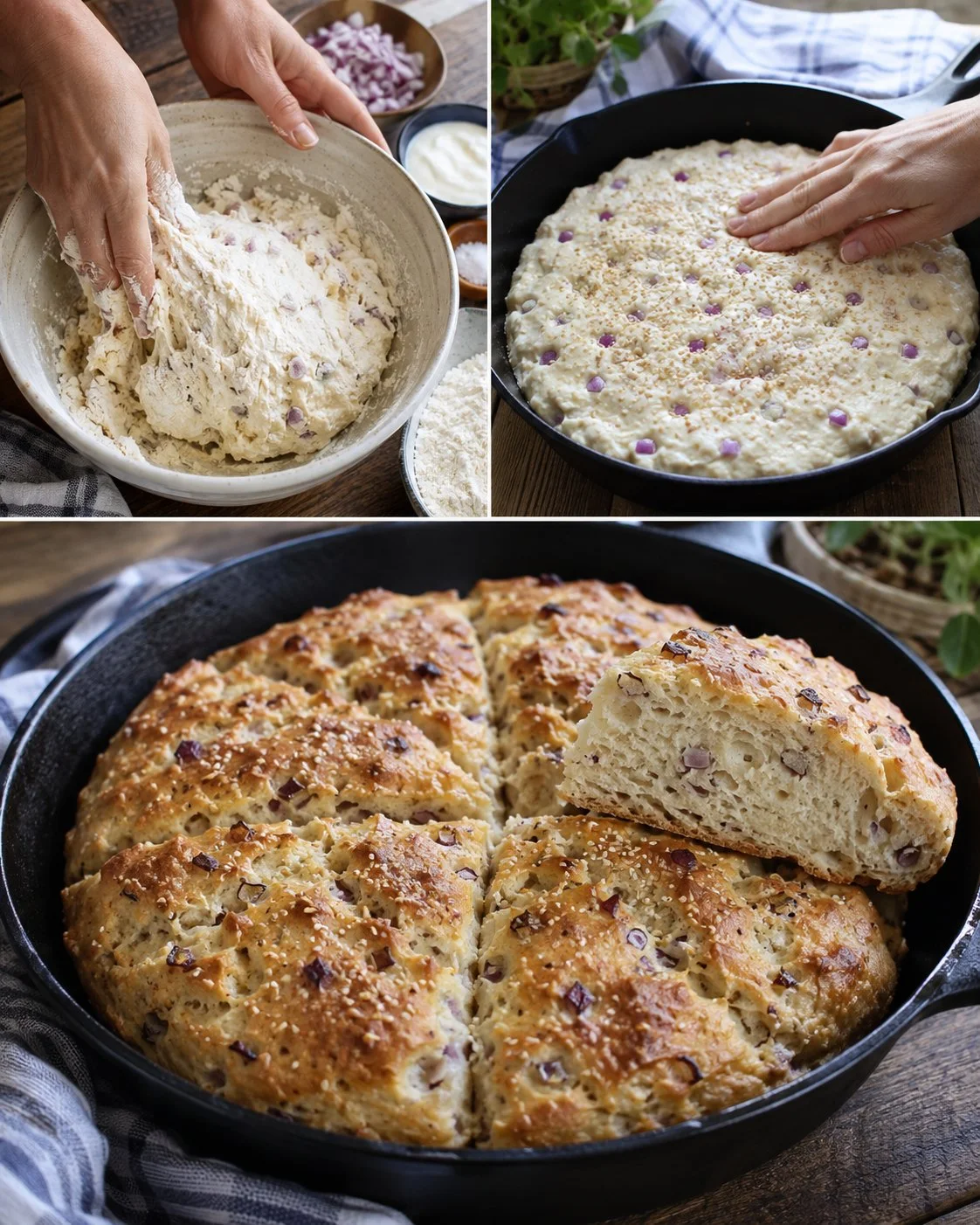
This no-knead onion skillet bread is the kind of recipe I reach for when I want homemade bread without turning the oven on—soft inside, golden on the outside, and full of green onion flavor. It’s definitely comfort food (white flour, butter, and a creamy spread), so it’s best enjoyed as a satisfying side or snack rather than an everyday “light” option—especially if you’re watching refined carbs or saturated fat. If you like simple breads, you might also enjoy this easy no-knead crispy bread for a different texture and shape.
This recipe is especially good for home cooks who feel intimidated by yeast or kneading, because the dough comes together with a spoon and a couple of folds. Cooking it low and slow in a covered skillet gives you that bakery-style tenderness without special equipment—just keep the heat gentle so the bottoms don’t brown before the centers cook through.
Why This Recipe Is Helpful
- No oven needed—great for hot days, small kitchens, or when your oven is busy.
- No kneading required; a simple mix and a few folds build enough structure.
- Green onions add flavor without needing lots of extra ingredients.
- The cream cheese herb spread turns it into a complete snack or easy appetizer.
- Makes portion-friendly pieces (6 small breads), which is handy for sharing.
- Budget-friendly pantry basics: flour, yeast, salt, water, and a bit of butter.
Who This Recipe Is Best For
If you like savory breads (think scallion pancakes’ cozy cousin, but yeasted and fluffy), you’ll love this. It’s great for families who want a warm side for soup, anyone building a simple brunch board, or home cooks who want “fresh bread energy” without the time commitment of a long rise and bake.
It’s also a nice option if you don’t have a Dutch oven or baking stone—your skillet and a lid do the heavy lifting here.
Who Should Be Careful
This bread is made with all-purpose flour and a little sugar, so it’s fairly refined-carb heavy and may not be ideal for people managing blood sugar or aiming for higher-fiber meals (unless you pair it with protein and vegetables and keep portions moderate). The spread includes cream cheese and olive oil, which can feel rich for some people, and it’s not suitable for anyone who needs to avoid dairy. If you’re sensitive to garlic, consider reducing it in the spread.
Ingredients
For the onion skillet bread
- All-purpose flour: 2 ¾ cups (340 g)
- Warm water (about 100–110°F / 38–43°C): 1 cup (240 ml)
- Dry yeast: 1 ¼ teaspoons (4 g)
- Sugar: 2 teaspoons (10 g)
- Salt: 1 teaspoon (about 6 g)
- Green onions (scallions), thinly sliced: 4 to 6 (about 60–90 g)
- Butter, melted and slightly cooled: 1 ½ tablespoons (20 g)
- Olive oil (for the pan): 1 tablespoon (15 ml)
For the cream cheese herb spread
- Cream cheese, softened: ½ cup (100 g)
- Lemon juice: 1 teaspoon (5 ml)
- Olive oil: 1 tablespoon (15 ml)
- Garlic cloves, finely grated or minced: 2
- Fresh parsley, chopped: 2 tablespoons (about 8 g)
- Fresh dill, chopped: 1 tablespoon (about 3 g)
- Salt: to taste (start with ¼ teaspoon)
Ingredient Notes
- Warm water: If it’s too hot, it can weaken the yeast. Aim for warm bath-water temperature.
- Green onions: Slice them thin so they soften into the dough instead of creating wet pockets.
- Butter: Folding it in after the first rest makes the dough feel silkier and helps browning.
- Cream cheese: Softened cream cheese mixes smoothly; cold cream cheese tends to stay lumpy.
- Garlic + herbs: Fresh herbs make the spread taste bright. If you only have dried, use about 1 teaspoon dried parsley and ½ teaspoon dried dill.
Kitchen Tools Needed
- Mixing bowl
- Measuring cups/spoons and/or kitchen scale
- Whisk or fork
- Rubber spatula or sturdy spoon
- Plastic wrap or a clean towel
- Bench scraper or knife (for dividing)
- Large nonstick or cast-iron skillet with a lid
- Small bowl for the spread
Step-by-Step Instructions
- Activate the yeast. In a mixing bowl, stir together the warm water, sugar, and dry yeast until dissolved. Cover with a towel and let stand for about 10 minutes, until lightly foamy on top.
- Mix the dough. Stir in the sliced green onions. Add the flour and salt, then mix until you have a smooth, sticky dough with no dry flour pockets. Cover the bowl (plastic wrap plus a towel works well) and rest in a warm spot for 20 minutes.
- Fold in the butter. Pour in the melted, slightly cooled butter. Using a spatula, do a few stretch-and-folds: scoop under the dough, lift, and fold it over itself, rotating the bowl until you’ve folded all sides. Wet hands help if it’s sticking. Cover and let rise for about 60 minutes, until noticeably puffed and airy.
- Divide and shape. Lightly flour your work surface. Turn out the dough and divide into 6 equal pieces. Shape each into a ball by tucking the edges underneath (don’t over-flour—just enough to handle).
- Cook in the skillet (first side). Brush the skillet lightly with olive oil and set over low heat. Arrange the dough balls with a little space between them. Cover with a lid and cook on low for 20–25 minutes. You’re looking for a deep golden underside and dough that looks set and slightly risen on top.
- Flip and finish. Flip each bread. Cover again and cook for 12–15 minutes more, until the second side is golden and the breads feel cooked through (they should sound slightly hollow when tapped).
- Mix the spread. While the bread cooks, stir together cream cheese, lemon juice, olive oil, garlic, parsley, dill, and salt until creamy. Taste and adjust salt and lemon.
- Serve. Let the breads cool for 5 minutes (they finish setting inside), then serve warm with the herby cream cheese spread.
Pro Tips
- Keep the heat low. Skillet bread burns faster than you think; low heat gives the center time to cook.
- Use a lid that fits well. Trapped steam helps the bread rise and stay soft.
- Don’t add too much flour while shaping. Extra flour can make the breads dense and dry.
- If your kitchen is cool, extend the rise. The 60 minutes is flexible—look for puffiness, not the clock.
- Want extra onion flavor? Reserve a spoonful of sliced green onions to sprinkle on top right after shaping.
Healthier or Lighter Swaps
- Make it more filling: Replace up to 1 cup (120 g) of the all-purpose flour with whole wheat flour. Expect a slightly denser bread; you may need an extra 1–2 tablespoons (15–30 ml) water.
- Lighten the spread: Use reduced-fat cream cheese, or swap half the cream cheese with plain Greek yogurt for a tangier, lighter spread (it will be a bit looser).
- Portion strategy: Serve 1–2 small breads alongside soup, eggs, or a big salad to make the meal feel balanced without overdoing the bread.
Common Mistakes
- Killing the yeast with hot water: If the yeast doesn’t foam after 10 minutes, start over with cooler water.
- Cooking on medium/high heat: The outside browns too fast and the inside stays gummy.
- Skipping the rest after mixing: The dough needs that short rest to hydrate and become easier to fold.
- Overcrowding the skillet: If your pan is small, cook in batches so the breads cook evenly.
Variations
- Cheesy onion bread: Add ½ cup (50–60 g) shredded mozzarella or cheddar to the dough during the butter-fold step.
- Spicy version: Stir ¼–½ teaspoon chili flakes into the dough or into the cream cheese spread.
- Herb-forward bread: Mix 1 tablespoon chopped parsley or dill directly into the dough along with the green onions.
- No garlic spread: Swap garlic for lemon zest and extra dill for a fresher, milder finish.
Serving Suggestions
- Serve with tomato soup, lentil soup, or a simple cucumber-and-tomato salad.
- Add to a brunch plate with scrambled eggs and fruit.
- Use the breads as a base for smoked salmon or sliced tomatoes with extra herbs.
- For a richer snack, spread generously and top with more chopped green onions and a pinch of flaky salt.
Storage Instructions
- Store cooled breads in an airtight container at room temperature for up to 2 days.
- Refrigerate the cream cheese spread in a covered container for up to 4 days.
- For longer storage, freeze the breads (without the spread) for up to 2 months.
Reheating Tips
- Reheat breads in a dry skillet over low heat for 2–4 minutes per side, or in a 325°F (165°C) oven for about 8–10 minutes.
- If reheating from frozen, thaw at