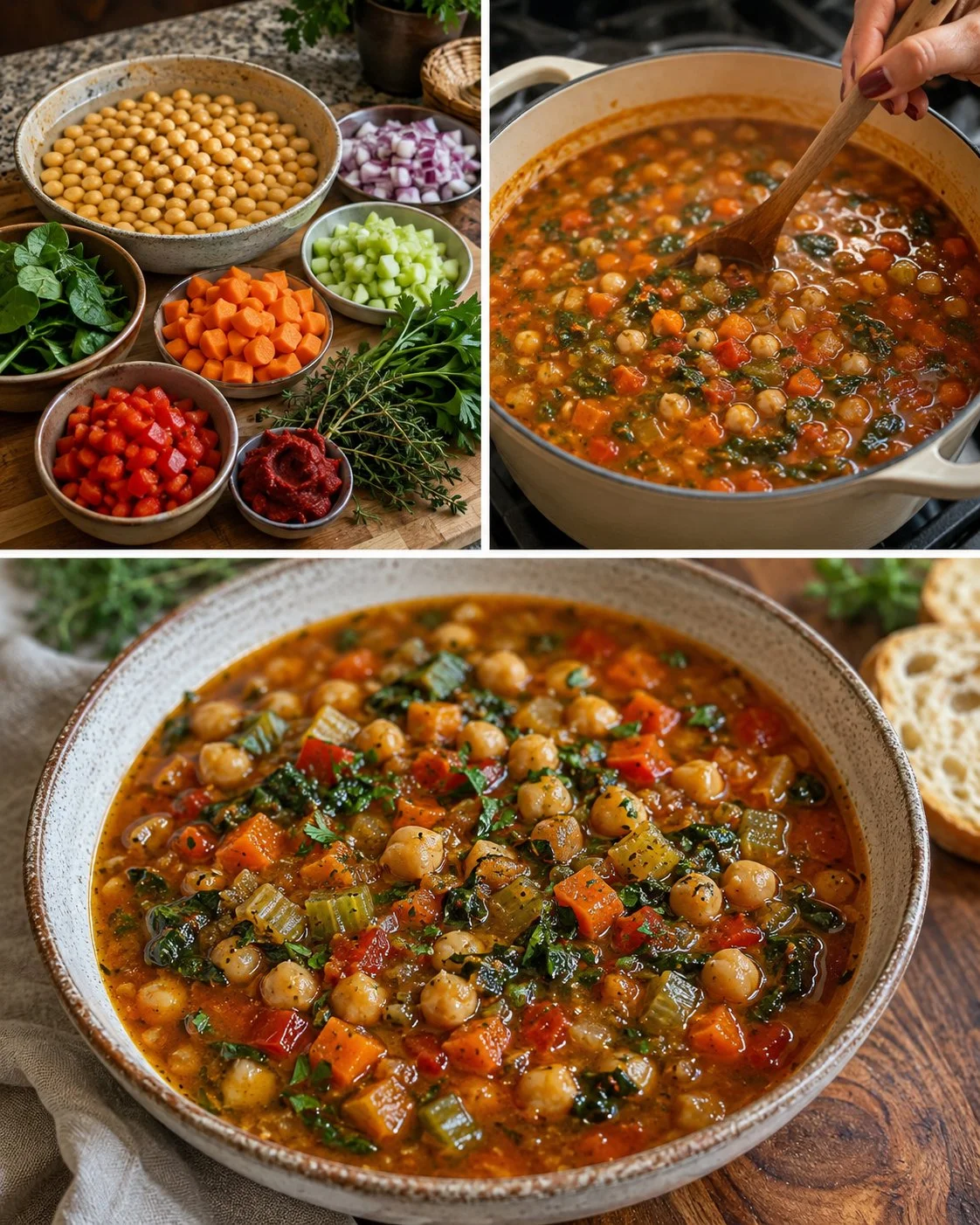
This Mediterranean-style chickpea vegetable soup is the kind of dinner that feels both cozy and practical: tender chickpeas, lots of vegetables, warm spices, and a bright squeeze of lemon to pull it all together. It’s naturally high in fiber from the chickpeas and veggies, which can be really filling for a simple meatless meal—just keep in mind that a big bowl can feel heavy for some people if they’re not used to beans.
If you like soups that taste even better the next day, this one’s for you. The paprika, oregano, turmeric, and tomato paste deepen as it sits, and the spinach and herbs keep it tasting fresh. If you’re also into chickpea-based meals beyond soup, you might like these baked chickpea vegetable patties for an easy lunch option using similar pantry ingredients.
Why This Recipe Is Helpful
- Uses affordable pantry staples (dried chickpeas, broth, tomato paste) plus flexible vegetables.
- Makes a genuinely filling meatless meal thanks to chickpeas, carrots, celery, and peppers.
- A good “big pot” recipe for meal prep—leftovers reheat well and the flavor improves overnight.
- Lemon, herbs, and spices keep it bright and interesting without needing a lot of extra ingredients.
- Easy to adjust: make it creamier, spicier, or lighter depending on how you finish it.
Who This Recipe Is Best For
This is great for home cooks who want a hearty, vegetable-forward dinner that doesn’t rely on meat. It’s also a solid option for anyone trying to get more legumes into their week in a way that still feels familiar and comforting (think: classic soup vibes, but more fragrant and colorful).
It’s especially nice for meal preppers, because the chickpeas hold their texture and the broth stays flavorful instead of turning bland after refrigeration.
Who Should Be Careful
If you’re sensitive to high-fiber meals, a chickpea-heavy soup can feel a little too filling or cause discomfort—starting with a smaller portion and chewing well can help.
If you’re watching saturated fat or prefer lighter soups, note that this uses butter and milk for richness (easy to reduce or swap—see the lighter swaps section). And if you’re managing sodium, choose a low-sodium broth and salt at the end.
Ingredients
- Dried chickpeas, 2 cups (about 400 g), soaked overnight
- Butter, 2 tablespoons (28 g)
- Olive oil, 1 tablespoon (15 ml)
- Onion, 1 large (about 200 g), diced
- Garlic, 2 cloves, minced
- Celery, 2 stalks (about 100 g), diced
- Carrots, 2 medium (about 200 g), diced
- Bell peppers (mixed colors), 2 medium (about 250–300 g), diced
- Sweet paprika, 1 teaspoon (2 g)
- Dried oregano, 1 teaspoon (1 g)
- Ground turmeric, 1 teaspoon (2–3 g)
- Chili flakes, 1/2 teaspoon (or to taste)
- Tomato paste, 2 tablespoons (30 g)
- Vegetable broth, 6 cups (1.4 L), plus more as needed
- Milk, 1/2 cup (120 ml)
- Fresh spinach, 1 bunch (about 5–6 oz / 150–170 g), roughly chopped
- Fresh parsley, 1/2 cup (15 g), chopped
- Fresh dill, 1/4 cup (5–8 g), chopped
- Lemon, 1 (zest optional), juice to taste
- Salt, to taste (start with 1 teaspoon / 6 g and adjust)
Ingredient Notes
- Dried chickpeas vs canned: Dried chickpeas give the best texture and a cleaner chickpea flavor, but they do require soaking and a longer simmer. (If you need a shortcut, see the FAQ for a canned option.)
- Butter + olive oil: I like the combination here—olive oil helps prevent butter from scorching, and butter adds a little roundness that works well with paprika and herbs.
- Tomato paste: This is doing a lot of work for color and depth. Let it cook for a minute before adding broth so it tastes more “toasty” than raw.
- Milk: It softens the acidity of the tomato paste and makes the broth slightly creamy without turning it into a heavy cream soup.
- Fresh herbs + lemon: Add them near the end so they stay bright. Lemon juice is best added gradually—easy to add more, impossible to take out.
Kitchen Tools Needed
- Large soup pot or Dutch oven
- Cutting board and knife
- Measuring cups/spoons
- Wooden spoon
- Colander
- Ladle
Step-by-Step Instructions
- Soak the chickpeas. Rinse the dried chickpeas under cold water, then soak them overnight in plenty of water (they’ll expand a lot). Drain and rinse before cooking.
- Start the base vegetables. In a large pot over medium heat, melt the butter with the olive oil. Add the onion, garlic, celery, and carrots. Cook 8–10 minutes, stirring often, until the onions look soft and the carrots are starting to lose their crunch.
- Bloom the spices and peppers. Add the diced bell peppers, paprika, oregano, turmeric, and chili flakes. Stir and cook for 2–3 minutes until the pot smells fragrant and the peppers start to soften.
- Cook the tomato paste. Stir in the tomato paste and let it cook for 1 minute, scraping the bottom of the pot—this small step helps prevent a “tinny” tomato taste.
- Simmer the chickpeas. Add the drained chickpeas and vegetable broth. Bring to a boil, then reduce to a steady simmer. Cover with the lid slightly ajar and simmer for about 75–95 minutes, stirring occasionally, until chickpeas are tender. (Older chickpeas can take longer; add a splash more broth if it reduces too much.)
- Finish with milk and greens. Stir in the milk, spinach, parsley, and dill. Simmer uncovered for 8–10 minutes, just until the spinach is wilted and the soup looks cohesive.
- Brighten and season. Squeeze in lemon juice a little at a time (start with 1–2 tablespoons / 15–30 ml). Season with salt to taste. If you want, add a pinch of lemon zest right before serving for extra fragrance.
- Serve. Ladle into bowls and top with extra herbs. If you like heat, a tiny sprinkle of chili flakes on top goes a long way.
Pro Tips
- Don’t rush the simmer. Chickpeas go from “still chalky” to “creamy-tender” with just a bit more time—taste them before you stop cooking.
- Keep the lid cracked. It reduces nicely without boiling over, and the broth concentrates in flavor.
- Add lemon at the end. If it cooks too long, the brightness dulls.
- Cut veggies evenly. Similar-sized dice means everything softens at the same pace (no crunchy carrots with mushy celery).
- Want it thicker? Mash a small ladle of chickpeas against the side of the pot and stir back in.
Healthier or Lighter Swaps
- Use less butter: Try 1 tablespoon (14 g) butter + 2 tablespoons (30 ml) olive oil for a lighter finish while keeping good flavor.
- Swap the milk: Use unsweetened soy milk or oat milk for a dairy-free option (choose one that’s unflavored). Or skip the milk entirely for a more brothy soup.
- Increase vegetables: Add an extra cup of chopped carrots/celery/peppers or stir in zucchini near the end.
- Watch salt: Use low-sodium broth and finish with lemon and herbs to make it taste seasoned without over-salting.
Common Mistakes
- Not soaking long enough: Under-soaked chickpeas take much longer to soften.
- Adding salt too early (sometimes): It doesn’t always prevent softening, but with older chickpeas it can slow things down—season more heavily at the end if you’ve had issues before.
- Boiling hard instead of simmering: A hard boil can break chickpeas and make the broth cloudy.
- Overcooking the herbs: Parsley and dill taste fresher when they only simmer briefly.
Variations
- Make it smoky: Add 1/2 teaspoon smoked paprika (in addition to or instead of sweet paprika).
- Make it extra hearty: Stir in 1 cup (150 g) cooked rice or small pasta at the end and add extra broth as needed.
- Add more protein: Top with a dollop of Greek yogurt (if you eat dairy) or serve with a side of eggs for non-vegetarian households.
- More greens: Swap spinach for chopped kale (add kale a bit earlier since it takes longer to soften).
Serving Suggestions
Serve with warm crusty bread, pita, or a simple rice pilaf. For a more balanced plate, I like adding a crunchy side salad (cucumbers, tomatoes, and a little olive oil + lemon) to contrast the soft, stewy texture of the soup.
Storage Instructions
- Refrigerator: Store in an airtight container for up to 4 days.
- Freezer: Freeze for up to 3 months. For best texture