If you’re looking for a flavorful, wholesome dish that comes together quickly with pantry staples, this salmon and barley bake is a winner. It’s the kind of recipe that works well for either dinner or a make-ahead lunch, combining tender cooked barley, flaky canned salmon, and a fresh pop of lemon and dill. The creamy Greek yogurt keeps it moist without weighing it down, and the rolled oats on top add a subtle crunch after baking. I’ve found it’s a great way to use canned salmon beyond salads and sandwiches — nourishing, simple, and just satisfying enough without needing fancy ingredients or a lot of fuss. Plus, it reheats well, making it practical for busy weeknights.
Why You’ll Love This Recipe
- Uses easy-to-find, affordable ingredients like canned salmon and frozen peas.
- Ready in under 45 minutes, perfect for quick weeknight meals.
- Balanced with protein, fiber, and fresh herbs for a wholesome one-dish dinner.
- The lemon zest and dill add a fresh, bright flavor that keeps it from feeling heavy.
- Rolled oats on top create a subtle, crispy crust that contrasts nicely with the soft interior.
- Cooking tips included to prevent dryness and ensure the bake holds together well.
Ingredients
- 3 cups (540 g) cooked pearl barley
- 2 cans (about 14.75 oz / 420 g each) salmon, drained and flaked
- 1 cup (150 g) frozen peas, thawed
- 1/2 cup (120 g) plain Greek yogurt
- 2 large eggs
- 2 tablespoons (8 g) fresh dill, chopped
- 1 teaspoon lemon zest (from about 1 lemon)
- 1/3 cup (30 g) rolled oats
- 1/2 teaspoon salt (adjust to taste)
- 1/4 teaspoon freshly ground black pepper
Ingredient Notes
Canned salmon works perfectly here because it flakes easily and adds a lot of flavor while keeping things convenient. Look for varieties with no added sauces or seasoning to keep control over the flavors. Pearl barley provides a chewy texture and hearty base—if you can’t find pearl barley, hulled barley is a good substitute, but cook it a bit longer to soften. The Greek yogurt adds moisture and richness but keeps the bake light compared to heavier creams or mayo. Fresh dill is key—it brightens the whole dish and pairs beautifully with lemon. If you don’t have fresh dill, dried works in a pinch but use about half the amount to avoid overpowering.
Kitchen Tools Needed
- Medium bowl for mixing
- Grater or zester for lemon
- 8-inch (20 cm) square baking dish
- Measuring cups and spoons
- Spatula or wooden spoon
- Oven thermometer (optional but useful for accuracy)
Step-by-Step Instructions
-
Preheat your oven to 375°F (190°C). If you use a glass or ceramic baking dish, this temperature will give you the best texture for the bake.
-
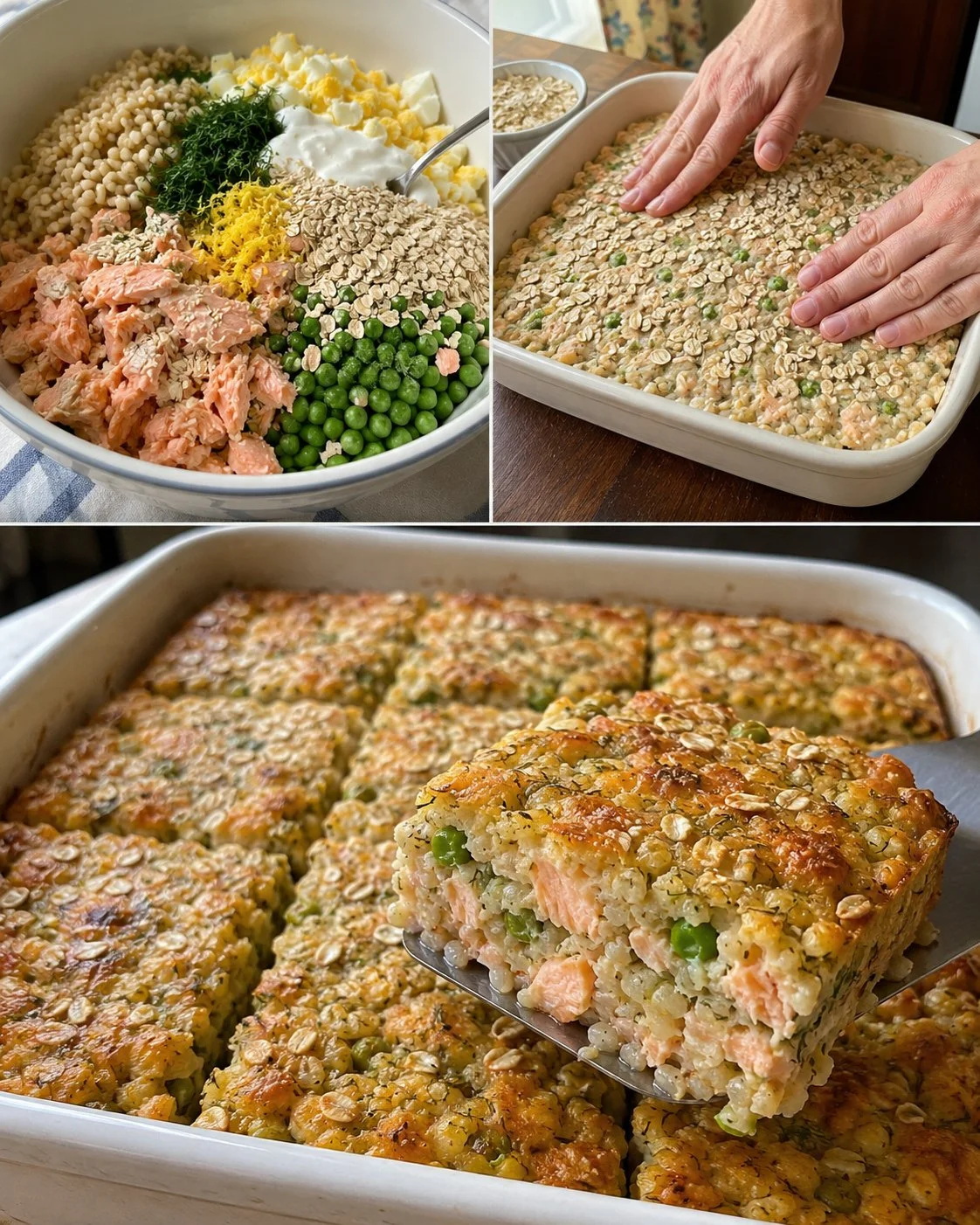
In a medium bowl, combine the cooked barley, drained salmon (flaked with a fork to break up large chunks), and thawed peas.
-
Add the Greek yogurt, eggs, chopped dill, lemon zest, salt, and pepper. Gently stir until everything is evenly mixed but try not to overwork it; you want the ingredients to retain some texture.
-
Lightly grease your 8-inch (20 cm) square baking dish with a little oil or butter to prevent sticking.
-
Press the mixture firmly into the dish in an even layer. This helps the bake set well and hold together when sliced.
-
Sprinkle the rolled oats evenly over the top. They will toast and add a bit of crunch during baking.
-
Bake for 28 to 32 minutes. The edges should turn slightly golden and the center should feel set but not dry or rubbery—if it jiggles too much, give it a few more minutes.
-
Remove from the oven and let it rest for at least 10 minutes before slicing. This rest time lets it firm up and makes serving easier.
Pro Tips
- Make sure to drain the canned salmon very well to avoid excess moisture making the bake soggy.
- Cook the barley a day ahead if possible; chilled barley mixes better and helps the bake hold its shape.
- Don’t skip the lemon zest—even a small amount lifts the flavors remarkably.
- Use fresh dill if you have it; add it just before baking to keep its brightness.
- If you want a crispier topping, broil the oats for 1-2 minutes at the very end, watching closely to avoid burning.
Common Mistakes
- Not draining the salmon thoroughly—excess liquid will turn the bake mushy.
- Pressing the mixture too lightly into the dish; the bake falls apart if it isn’t compact.
- Baking at too low a temperature or cutting too soon; it needs that 10-minute resting period to set perfectly.
- Overmixing the filling can make it gluey, so stir gently.
- Skipping the oats topping reduces the contrast of textures that makes this dish so satisfying.
Variations
- Swap peas for other frozen veggies like corn or green beans for a different twist.
- Add a handful of grated cheddar or Parmesan cheese to the mix for extra richness.
- Stir in a teaspoon of Dijon mustard for a subtle tangy kick.
- Use fresh salmon leftovers instead of canned, but reduce the yogurt slightly to avoid sogginess.
Serving Suggestions
This bake is great served warm or at room temperature. Pair it with a simple green salad or steamed veggies for a balanced meal. A squeeze of fresh lemon juice just before serving adds a welcome brightness. Leftovers can be sliced into squares and eaten cold as a packed lunch or snack.
Storage Instructions
Store leftovers covered in the refrigerator for up to 3 days. Keep the bake in its dish or transfer to an airtight container to prevent drying out.
Reheating Tips
Reheat individual portions in the microwave for 1 to 2 minutes until warmed through. You can also reheat in a preheated oven at 350°F (175°C) for 10 to 15 minutes, which helps refresh the oat topping. Avoid overheating to keep the bake moist and tender.
Nutrition Estimate (per serving, makes 6 servings)
- Calories: 280
- Protein: 24 g
- Carbohydrates: 26 g
- Fat: 6 g
Recipe Summary
- Prep Time: 10 minutes
- Cook Time: 30 minutes
- Total Time: 40 minutes
- Servings: 6
- Cuisine: American/European
- Course: Main dish
- Calories: 280 per serving
Frequently Asked Questions
Can I use fresh salmon instead of canned?
Yes, you can replace canned salmon with cooked fresh salmon. Just ensure it’s well flaked, and reduce the yogurt slightly to keep the mixture from getting too wet.
Is pearl barley necessary?
Pearl barley is ideal for this recipe because it cooks relatively quickly and has a nice chewy texture. You can substitute with hulled barley, but it will take longer to cook and might produce a firmer result.
Can I freeze this bake?
Yes, you can freeze cooled pieces wrapped tightly in foil or airtight containers for up to 2 months. Thaw in the fridge overnight before reheating.
What if I don’t have Greek yogurt?
Plain regular yogurt or sour cream can work, but Greek yogurt adds creaminess without too much extra moisture, so stick to something thick to avoid sogginess.
How do I make sure the bake holds together?
Press the mixture firmly into the baking dish and don’t cut it before it’s fully cooled and rested. Use eggs as a binder and don’t overload with wet ingredients.
This salmon and barley bake offers a wholesome, fuss-free meal that’s packed with protein and easy to prepare. It hits a nice balance between creamy and hearty, with just enough brightness and texture to keep it from feeling heavy. Whether you’re feeding a family or packing lunches for the week, it’s a recipe worth keeping in your regular rotation.