Japanese lemon cake is a delightfully soft and airy dessert that melts in your mouth and brightens any occasion with its fresh lemon flavor. This recipe is simple yet impressive, making it accessible for home cooks looking to create something special without complicated steps. It combines yogurt and oil to keep the cake moist while the lemon zest and juice offer a refreshing zing. Ideal for dessert lovers who prefer a light and delicate treat, this cake pairs wonderfully with strawberry jam to enhance its citrus notes. For a feel of this sweet simplicity, you can also explore other quick citrus cake recipes like grandma’s lemon cake for more inspiration.
Why This Recipe Is Helpful
- It uses simple ingredients that you likely have on hand, making it easy to prepare any time.
- Yogurt in the batter adds moisture and a tender crumb without heaviness.
- The topping creates a nice texture contrast with a sweet, crunchy layer.
Best For
This recipe is perfect for anyone who enjoys light, citrusy desserts that are not too sweet or dense. It works well for afternoon tea or a family dessert that feels homemade but special.
Be Careful If
Be aware that this cake includes sugar and oil which make it rich and sweet, so it’s best enjoyed in moderation. Additionally, it contains nuts and dairy, so it might not be suitable for those with allergies.
Ingredients
- 3 eggs
- 150 g (3/4 cup) sugar
- A pinch of salt
- A few drops of vanilla extract
- 120 ml (1/2 cup) vegetable oil
- 150 g (2/3 cup) plain yogurt
- Zest of 1 lemon
- Juice of 1 lemon
- 250 g (2 cups) all-purpose flour
- 15 g (1 tbsp) baking powder
- 1 tbsp sugar (for topping)
- 2 tbsp shredded coconut (for topping)
- 1 tbsp chopped walnuts (for topping)
- Butter (to grease the baking dish)
- Flour (to dust the baking dish)
- For serving: strawberry jam and additional shredded coconut (optional)
Ingredient Notes
- Yogurt keeps the cake moist and adds subtle tanginess; plain yogurt is best.
- Using fresh lemon zest and juice intensifies the citrus flavor naturally.
- Topping ingredients like nuts and coconut add texture and a slight crunch.
- Vanilla extract enhances the overall aroma and balances the lemon brightness.
Kitchen Tools Needed
- Mixing bowls
- Whisk or electric mixer
- Sifter for flour and baking powder
- 24 cm (9.5-inch) round baking dish
- Measuring cups and spoons
- Spatula
Step-by-Step Instructions
- Preheat the oven to 180°C (356°F). Grease the baking dish with butter and lightly dust it with flour to prevent sticking.
- In a large bowl, whisk together the eggs, sugar, salt, and vanilla extract until the mixture is fluffy and creamy.
- Gradually pour in the oil while continuing to whisk to combine evenly.
- Stir in the yogurt and blend well into the mixture.
- Add the lemon zest and lemon juice, then mix thoroughly to distribute the flavor.
- Sift the flour and baking powder together. Add them to the wet ingredients in two batches, folding gently until fully incorporated without overmixing.
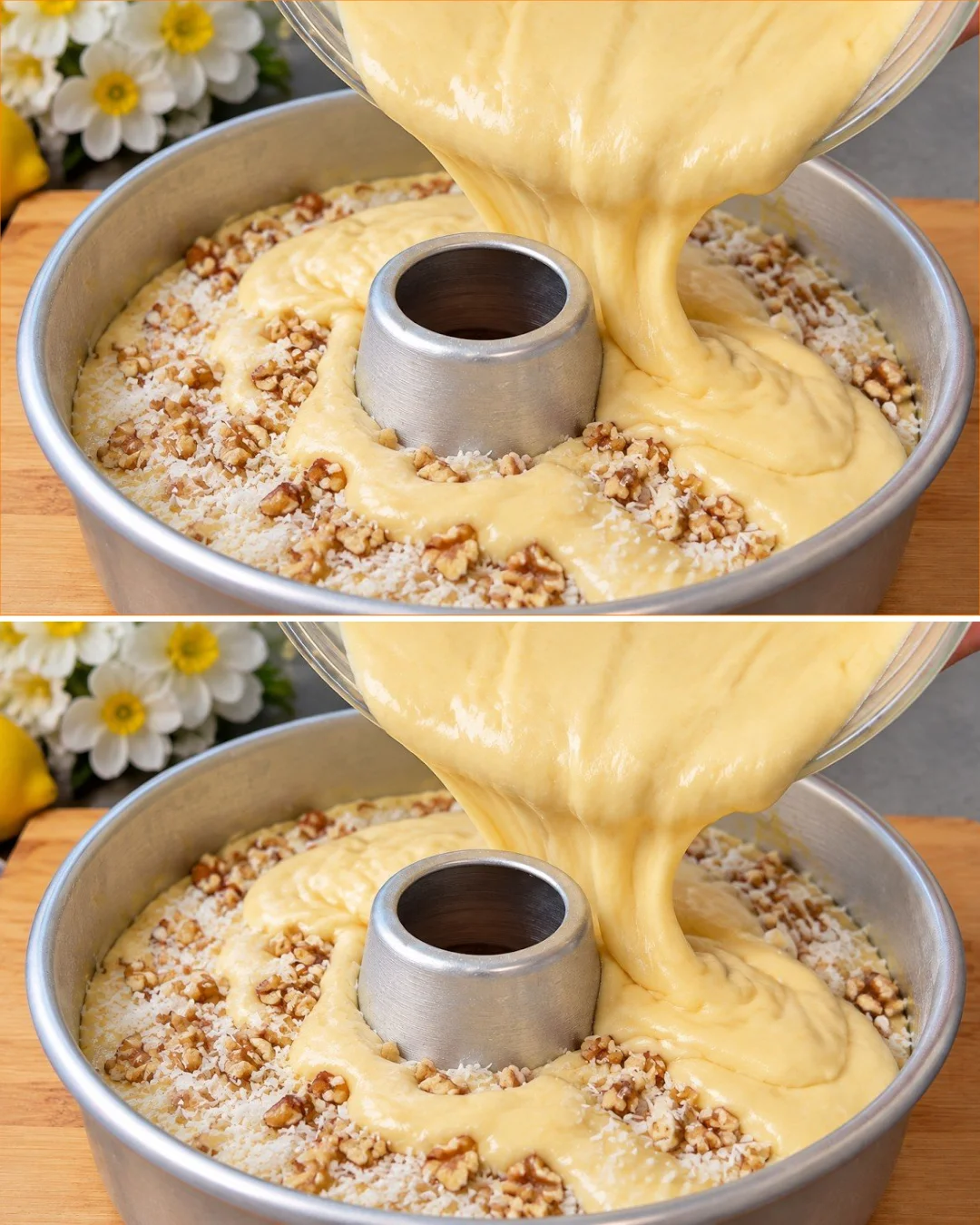
- Pour half of the batter into the prepared baking dish, smoothing out the surface.
- Evenly sprinkle the topping sugar, shredded coconut, and chopped walnuts over the first layer.
- Carefully pour the remaining batter over the topping, spreading gently to cover.
- Bake for 40–45 minutes, or until a toothpick inserted into the center comes out clean and the top is golden.
- Remove from the oven and allow the cake to cool slightly before removing it from the dish.
- Serve warm or at room temperature with strawberry jam and extra shredded coconut if desired.
Pro Tips
- Do not overmix the batter once you add the flour to keep the cake light and airy.
- Let the cake cool slightly before serving to help it set without drying out.
- For a stronger lemon flavor, add more zest but be careful not to make the batter too wet.
- Evenly distribute the toppings to get a balanced crunch in every bite.
Lighter Swaps
- Substitute half the oil with unsweetened applesauce for a lower-fat version, but expect a slightly denser texture.
- Use Greek yogurt for more protein and creaminess.
- Maple syrup or honey can replace sugar if preferred, adjusting the liquid content accordingly.
Common Mistakes
- Overmixing the batter after adding flour can make the cake tough.
- Not greasing and flouring the pan thoroughly can cause sticking.
- Baking at too high a temperature risks drying out the cake or burning the topping.
Serving Suggestions
Serve slices with a dollop of strawberry jam and a sprinkle of extra coconut. It’s also lovely with fresh berries or a light dusting of powdered sugar.
Storage Instructions
Store the cake in an airtight container at room temperature for up to 2 days, or refrigerate for up to 4 days. Bring to room temperature before serving for best texture.
Reheating Tips
Warm individual slices gently in the microwave for 15–20 seconds to enjoy the softness and fresh lemon aroma again.
Nutrition Estimate
- Calories: approx. 280 per serving
- Protein: 5 g
- Carbohydrates: 35 g
- Fat: 13 g
Values are estimates and may vary by ingredients and portion size.
Recipe Summary
- Prep Time: 15 minutes
- Cook Time: 40–45 minutes
- Total Time: 55–60 minutes
- Servings: 8
- Cuisine: Japanese-inspired
- Course: Dessert
- Calories: approx. 280 per serving
Frequently Asked Questions
Q: Can I use lemon extract instead of fresh lemon?
A: Fresh lemon zest and juice are best for flavor and moisture, but lemon extract can be used in a pinch—reduce the quantity as it is more concentrated.
Q: Is this cake gluten-free?
A: Not as written—this recipe uses all-purpose flour. You could try a gluten-free flour blend but results may vary.
Q: Can I make this cake dairy-free?
A: You can substitute yogurt with a plant-based yogurt and use a suitable oil. The texture may change slightly.
Conclusion
This Japanese lemon cake is simple to make yet surprisingly elegant and flavorful. Its light texture and fresh citrus highlight make it a great choice for anyone wanting a homemade cake that isn’t heavy or overly sweet. Enjoy baking and sharing this delightful treat!