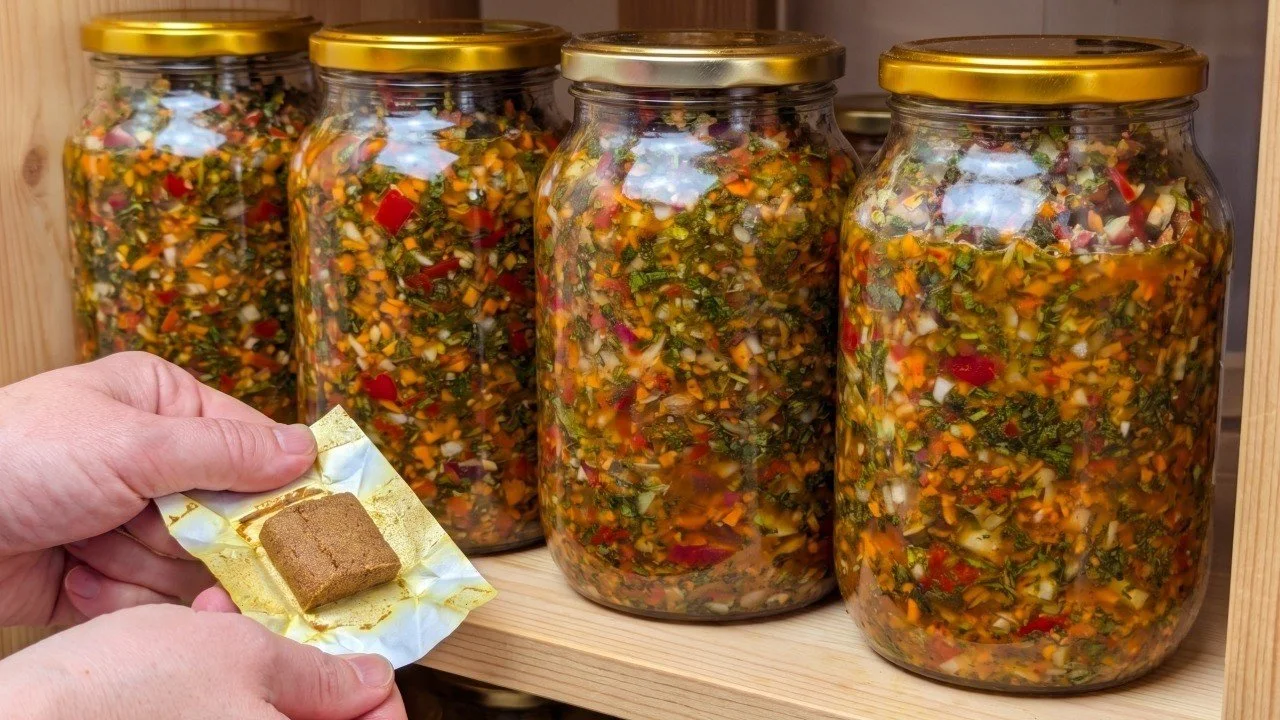
This salty vegetable-herb paste is my favorite “no-cook” pantry shortcut when I want real flavor without bouillon cubes. You chop and mix fresh vegetables, herbs, and spices with plenty of salt, pack it into sterilized jars, and it keeps for months in a cool, dark spot. Stir a spoonful into hot water for an instant broth base, or use it to season soups, rice, and stews. It’s vegetable-forward and naturally low in fat, but it is very high in sodium—so a little goes a long way. If you also make traditional stock, try pairing it with homemade chicken broth without chemicals for even deeper flavor.
Why This Recipe Is Helpful
- Keeps “fresh-broth” flavor on hand all year with no simmering on prep day
- Turns plain water, grains, and soups into something savory in minutes
- Helps reduce food waste by using up herbs and vegetables while they’re at their best
Best For
Home cooks who want an easy, make-ahead seasoning base for everyday soups, beans, rice, and quick weeknight cooking.
Be Careful If
You’re limiting sodium: this paste is salt-preserved, so use small amounts and taste before adding extra salt to a dish.
Ingredients
- Carrots, chopped: 1.1 lb (500 g)
- Red bell peppers, diced: 1.1 lb (500 g)
- Onions, finely chopped: 1.1 lb (500 g)
- Tomatoes, pureed: 1.1 lb (500 g) (about 3–4 medium tomatoes)
- Table salt (fine): 1.1 lb (500 g)
- Turmeric: 2 tablespoons (about 14–16 g)
- Khmeli Suneli (optional): 2 tablespoons (about 10–14 g)
- Fresh herbs (mix of cilantro/coriander, dill, parsley), trimmed and chopped: 1.1 lb (500 g)
Ingredient Notes
- Use fine table salt here; it dissolves and distributes more evenly than coarse salt.
- Khmeli Suneli adds a warm, savory, slightly floral note; if you skip it, the paste still works well.
- Any mix of soft herbs is fine—just avoid woody stems and very tough herb stalks.
- Tomatoes should be ripe for best flavor; watery tomatoes make a looser paste (still usable).
Kitchen Tools Needed
- Cutting board and sharp knife
- Food processor or blender (for pureeing tomatoes; optional for finer paste)
- Large mixing bowl
- Clean spoon or spatula
- Sterilized jars with tight-fitting lids
- Funnel (optional, but helpful)
Step-by-Step Instructions
-
Sterilize the jars and lids.
Wash jars and lids in hot soapy water, rinse well, then sterilize (boiling water bath for 10 minutes or a dishwasher “sanitize” cycle). Let them air-dry completely. Dry jars matter here—extra water can affect texture and shelf life. -
Chop the vegetables.
Chop the carrots, dice the bell peppers, and finely chop the onions. Aim for small, even pieces so the paste packs well and scoops easily later. -
Puree the tomatoes.
Blend tomatoes until smooth (or mostly smooth). You’re looking for a pourable puree. -
Mix the seasoning base.
In a large bowl, combine the tomato puree, salt, turmeric, and (if using) Khmeli Suneli. Stir until the salt looks evenly dispersed—this helps it preserve the mixture consistently. -
Add herbs and vegetables.
Trim and chop the fresh herbs, then add herbs, carrots, peppers, and onions to the bowl. Stir very thoroughly. The mixture will look like a chunky, wet relish and will start to release juices as it sits. -
Rest briefly, then mix again.
Let the mixture sit 10 minutes, then stir once more. This gives the salt time to pull out moisture so everything combines evenly. -
Fill the jars.
Pack the mixture into sterilized jars, pressing down firmly with a spoon to remove air pockets. Leave about 1/2 inch (1–1.5 cm) headspace. Wipe rims clean, then seal tightly. -
Store properly.
Store jars in a dark place below 64°F (18°C). For best flavor and texture, wait 2–3 days before using so the salt and spices fully mingle. -
To make quick broth.
Bring 2 cups (480 ml) water to a boil. Stir in 1–2 tablespoons of the paste and simmer for 1–2 minutes. Taste—because salt levels vary, you may prefer starting with 1 tablespoon.
Pro Tips
- For a smoother “bouillon-like” paste, pulse the finished mixture briefly in a food processor before jarring.
- Press the paste down firmly in the jar; trapped air pockets can lead to discoloration on top.
- Start with less paste in soups and rice, then adjust—saltiness concentrates fast.
- If your kitchen runs warm, store opened jars in the fridge to keep color and flavor fresher longer.
Lighter Swaps
This recipe relies on salt for preservation; reducing it significantly will change safety and shelf life. If you want lower sodium, make the original version but use smaller amounts per pot and add extra unsalted vegetables/herbs while cooking.
Common Mistakes
- Not sterilizing or fully drying jars: extra moisture can shorten shelf life.
- Under-mixing the salt: uneven salt distribution can give inconsistent flavor and preservation.
- Using too much at once: it can oversalt a whole pot quickly—measure at first.
Serving Suggestions
Use it to season soups, lentils, beans, rice, pasta water, or braises; it’s also great stirred into pan sauces where you’d normally reach for stock concentrate.
Storage Instructions
Unopened jars keep in a cool, dark place below 64°F (18°C) for up to 12 months. After opening, refrigerate and use a clean spoon each time.
Reheating Tips
No reheating needed—just dissolve a spoonful into boiling water or stir directly into hot dishes.
Nutrition Estimate
Per 1 tablespoon serving (approximate):
Calories: 10–20
Protein: 0–1 g
Carbs: 2–4 g
Fat: 0 g
Values are estimates and may vary by ingredients and portion size.
Recipe Summary
Prep Time: 35 minutes
Cook Time: 0 minutes
Total Time: 35 minutes
Servings: About 80 tablespoons (varies by jar size and packing)
Cuisine: Eastern European / Georgian-inspired
Course: Seasoning / Pantry Staple
Calories: 10–20 per tablespoon
Frequently Asked Questions
Can I store this in the refrigerator instead of a pantry?
Yes. Refrigeration is a great option, especially after opening, and it helps keep the herbs greener.
Do I have to use all three herbs (cilantro, dill, parsley)?
No—use what you like and what looks fresh. Keep the total herb amount about the same for the intended flavor and texture.
Why is my paste watery after a few days?
Salt pulls moisture from vegetables and herbs, so some separation is normal. Stir before using, or shake the jar if it’s not too full.
Conclusion
If you want a truly handy alternative to bouillon cubes, this salt-preserved vegetable paste delivers fresh, savory flavor in a spoonful. Make it once, store it well, and you’ll have an easy broth base and everyday seasoning ready whenever you cook.