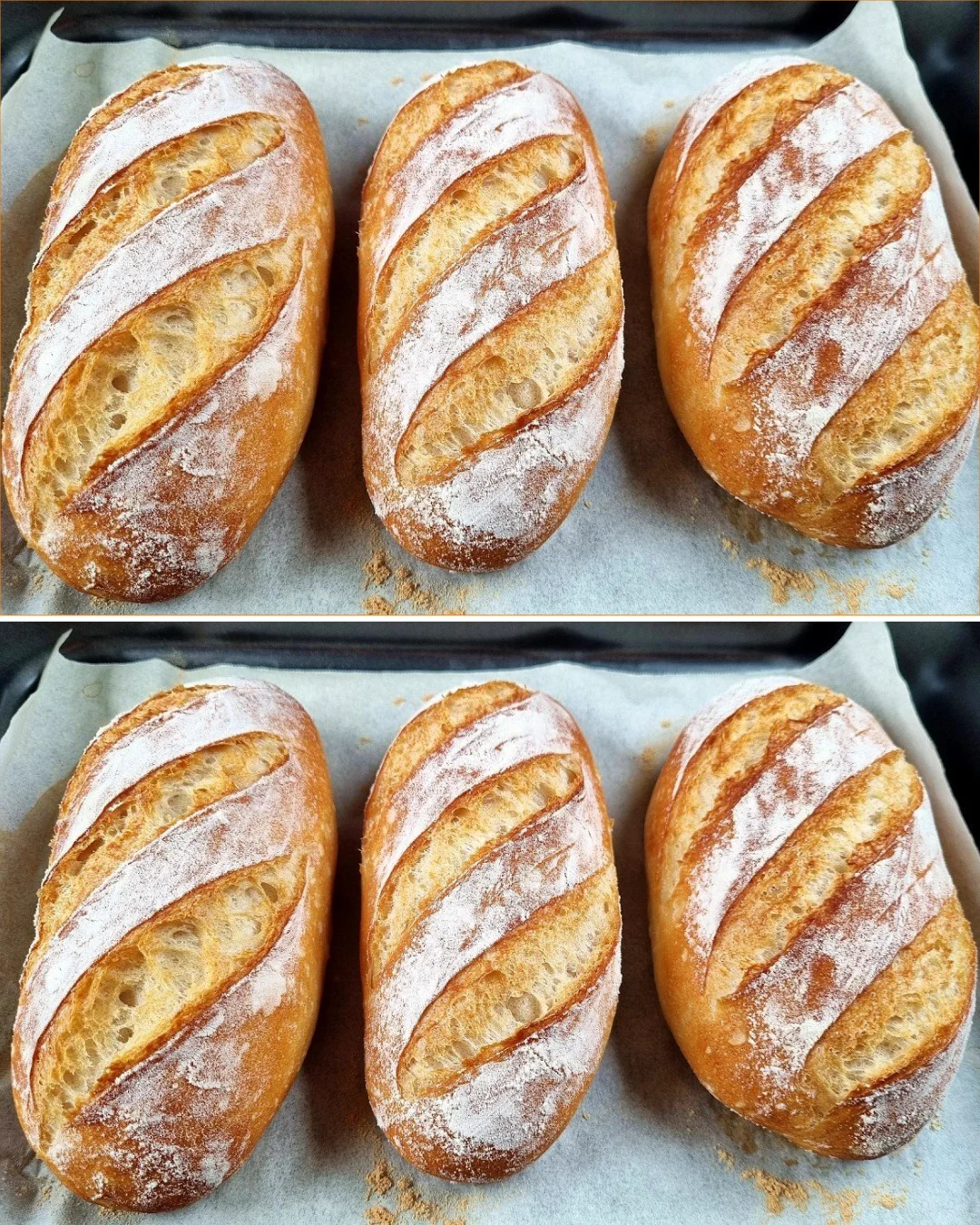
A simple French baguette recipe with just four ingredients: water, yeast, bread flour, and salt. This bread is perfect for anyone who loves fresh, homemade bread but wants to avoid the complexity of traditional kneading. Its soft interior and crispy crust make it ideal for sandwiches, toasts, or as an accompaniment to meals. Since it contains basic pantry staples without added fats or sugars, it’s a straightforward option suitable for most diets. For those keen on making bread at home, this recipe’s ease and reliability make it a fantastic staple to master. For more beginner-friendly bread ideas, check out this simple homemade bread recipe that will change how you shop!
Why This Recipe Is Helpful
- Requires only four basic ingredients commonly found in most kitchens.
- No kneading needed, making it accessible for beginners or busy cooks.
- Produces a classic French baguette with crunchy crust and soft crumb.
Best For
This recipe is ideal for home bakers looking for an easy yet authentic French baguette. It’s also perfect for those who want fresh bread without spending too much active time.
Be Careful If
Be cautious if you need gluten-free options, as this bread relies on bread flour containing gluten. Also, it requires yeast, so those with yeast sensitivities should check alternatives.
Ingredients
- 1 cup (220 ml) water, lukewarm
- ½ teaspoon (2 g) dry yeast or ¾ teaspoon (3 g) fresh yeast
- 2 ½ cups (320 g) bread flour
- 1 teaspoon (6 g) salt
Ingredient Notes
- Bread flour is preferred for its higher protein content, which gives the baguette its chewy texture and structure.
- Dry yeast works well and is easier to store; fresh yeast can be used if you have it on hand.
- Use lukewarm water to activate the yeast properly without killing it.
- Salt enhances flavor and controls yeast activity, so don’t skip it.
Kitchen Tools Needed
- Large mixing bowl
- Measuring cups and spoons
- Baking tray
- Sharp blade or bread lame for scoring
- Clean kitchen towel
- Pastry brush or spray bottle (for water)
Step-by-Step Instructions
- In a large bowl, combine lukewarm water, dry or fresh yeast, bread flour, and salt. Stir gently until no dry flour remains. Do not knead; just mix to form a shaggy dough.
- Cover the bowl with a damp towel or plastic wrap and let the dough rest for 30 minutes. This allows the flour to hydrate.
- Wet your hand and stretch each of the four edges of the dough toward the center, then lift and slap the dough back into the bowl. Repeat this folding and slapping motion for about 15 seconds.
- Cover again and let the dough rise until it doubles in size, usually about 2 hours at room temperature.
- Sprinkle flour lightly on a clean work surface. Transfer the dough and divide it into three equal parts. Shape each portion gently into a baguette by rolling it into a long oval shape.
- Let the shaped baguettes rest uncovered for 10 minutes to relax the gluten.
- Roll the dough lengths a bit longer if needed, place them on a baking tray, cover loosely with a towel, and let rise for another 30 minutes.
- Preheat your oven to 430°F (220°C). Lightly dust the baguettes with flour, then score the tops with a sharp blade to help them expand while baking. Sprinkle a little water around the baking tray or use a spray bottle to add steam. Cover the tray with another tray or large pan to trap steam.
- Bake covered for 20 minutes, then remove the top cover and bake for an additional 10 minutes or until the crust is deeply golden and crisp.
- Remove from oven and let the baguettes cool on a wire rack before slicing to keep the crumb tender.
Pro Tips
- Use lukewarm water around 100°F (37°C) to wake the yeast without overheating it.
- Letting the dough rest without kneading develops gluten naturally for better texture.
- Scoring deeply but carefully ensures the bread expands correctly without tearing oddly.
- Adding steam in the oven is key to a crispy crust; don’t skip the water sprinkle and cover step.
Lighter Swaps
This traditional recipe doesn’t lend itself well to lighter substitutions without changing the bread’s character. Using whole wheat flour will create a denser loaf, while reducing salt significantly may impact flavor and yeast behavior.
Common Mistakes
- Overworking or kneading the dough can lead to a denser bread rather than a light baguette.
- Not allowing enough time for the dough to rise will affect volume and texture.
- Skipping the steam step can result in a softer crust instead of a crispy one.
Serving Suggestions
Serve fresh baguettes with butter, cheese, or your favorite sandwich fillings. They also pair wonderfully with soups and salads.
Storage Instructions
Store leftover bread wrapped loosely in a paper bag at room temperature for up to 2 days. For longer storage, slice and freeze in an airtight container.
Reheating Tips
Reheat slices in a hot oven (350°F/175°C) for 5-7 minutes to restore crust crispness. Avoid microwaving to keep texture intact.
Nutrition Estimate
- Calories: Approximately 180 per serving (1/3 baguette)
- Protein: 6 g
- Carbohydrates: 36 g
- Fat: 0.5 g
Values are estimates and may vary by ingredients and portion size.
Recipe Summary
- Prep Time: 10 minutes
- Cook Time: 30 minutes
- Total Time: Approx. 3 hours (including rising times)
- Servings: 3 baguettes
- Cuisine: French
- Course: Bread
- Calories: Approx. 180 per serving
Frequently Asked Questions
Can I use all-purpose flour instead of bread flour?
Yes, but the baguette will be less chewy and may not rise as well because of the lower protein.
What if I don’t have a baking tray to cover for steam?
Place a small oven-safe pan with water on the bottom of the oven to create steam, or mist the oven right after placing the bread inside.
How long can I keep the dough in the fridge?
You can refrigerate the dough overnight for a slower fermentation, which can enhance flavor. Just bring it back to room temperature before shaping.
Conclusion
This straightforward French baguette recipe takes just four ingredients and minimal effort to produce bakery-quality bread at home. It’s a rewarding way to enjoy fresh, flavorful bread anytime. Once you try this, buying bread will feel less necessary.