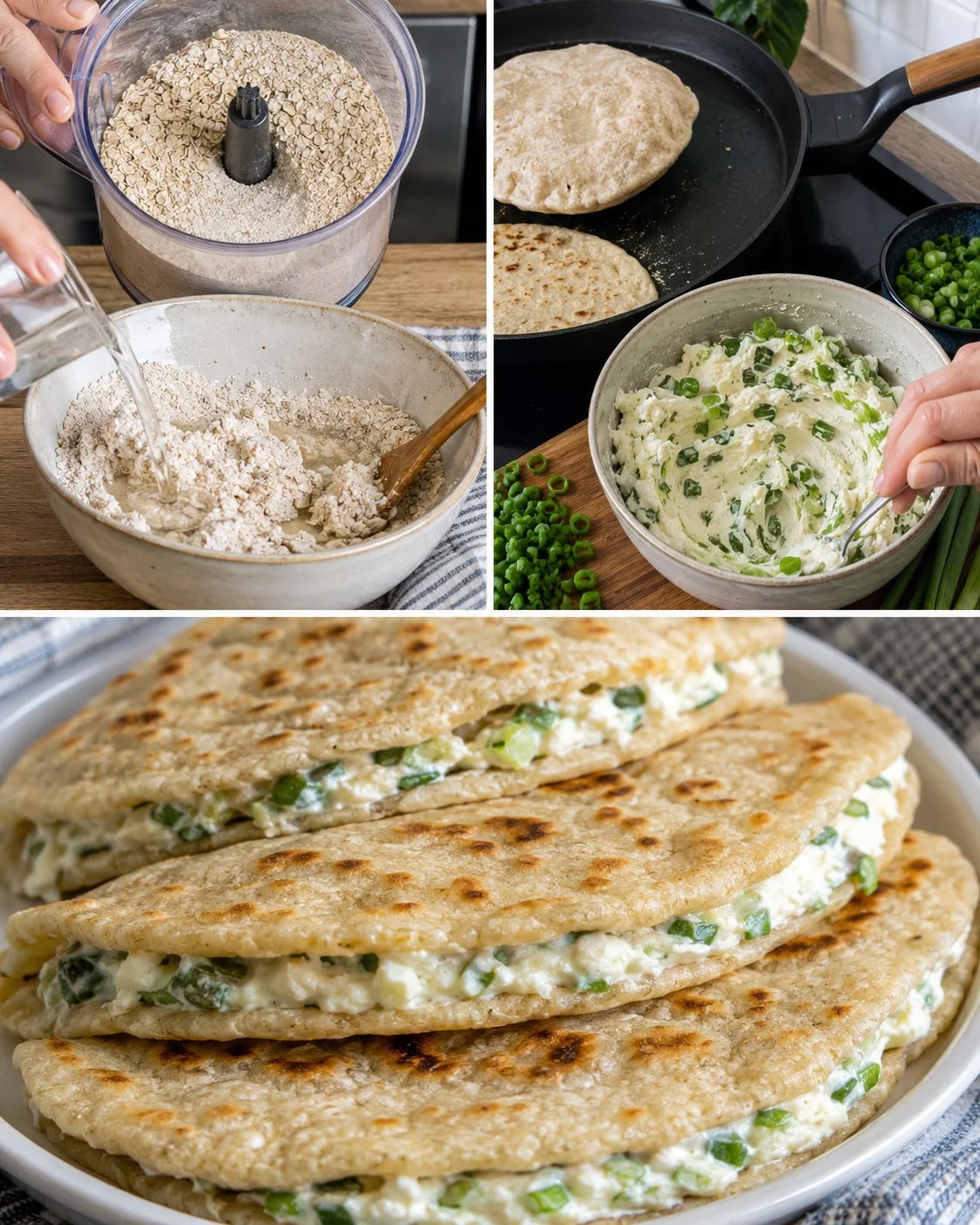
These puffy oat flatbreads are my go-to when I want something warm and bread-like without turning on the oven: you make a quick oat dough on the stovetop, pan-cook it until it balloons, then stuff it with creamy cheese, spring onion, and softly scrambled eggs. Because the base is oats and eggs, it’s more filling than many quick flatbreads and brings a nice mix of fiber and protein—but it’s still a comfort-y meal, especially if you’re generous with cream cheese or oil.
If you like easy breakfasts-for-dinner, simple weekend brunch, or a savory snack that actually holds you over, this one fits beautifully. The flatbread puffs best when the pan is properly hot and the dough is rolled evenly; if it’s too thick in spots, it can stay dense instead of forming that pocket. If you’re also into cozy, cheesy home-cooked meals, you might like this baked chicken and potato casserole with a creamy cheese topping for a more traditional dinner option.
Why This Recipe Is Helpful
- Uses pantry basics (oats, eggs, seasonings) and turns them into a satisfying meal.
- No yeast, no rising time, and no oven—just a blender and a skillet.
- Oats add a hearty texture and some fiber, which can help this feel more substantial than white-flour flatbreads.
- The egg filling boosts protein, making it more “meal” than snack.
- Easy to scale: double the dough and you’ve got quick lunches for the next day.
- Flexible with flavors—paprika, pepper, and spring onion are just the starting point.
Who This Recipe Is Best For
This is great for home cooks who want a warm, savory breakfast or quick lunch that feels a little special without much effort. It’s also a solid option for anyone trying to work more whole grains into everyday meals (oats do that nicely) while still keeping things family-friendly and familiar.
If you’ve got picky eaters, you can keep the filling simple (just eggs and a little cream cheese), then let everyone add their own toppings at the table.
Who Should Be Careful
- Anyone avoiding dairy: cream cheese is central here, though you can use a dairy-free spread (texture varies by brand).
- People who don’t tolerate rich or fatty foods well: cream cheese plus oil-fried eggs can feel heavy for some—use a lighter hand with oil and add a fresh side.
- Gluten concerns: oats are naturally gluten-free, but cross-contamination is common—use certified gluten-free oats if needed.
- Those managing blood sugar closely: oats are a nutritious carb, but they’re still a carb; portion size and what you pair it with matters.
Ingredients
For the oat flatbreads
- 1 cup (90 g) rolled oats (or quick oats)
- 1 cup (240 ml) water
- 1/2 tsp fine salt (3 g), plus more to taste
- Black pepper, to taste
- Paprika, to taste (about 1/2 tsp is a good start)
For the filling
- 2 large eggs
- 1 to 2 tsp (5 to 10 ml) vegetable oil, for scrambling (plus more if needed)
- 4 to 6 tbsp (60 to 90 g) cream cheese, to taste
- 2 to 3 spring onions/scallions, thinly sliced (about 1/4 cup / 25 g)
- Extra salt, pepper, and paprika, to taste
Ingredient Notes
- Oats: Blending and sifting makes the flatbreads less gritty and helps them puff more evenly. If you skip sifting, they’ll still work, but the texture is a bit more rustic.
- Water + oat flour cooking step: This brief “stovetop dough” step hydrates the oats fast and creates a cohesive dough without wheat gluten. The dough should look like thick mashed potatoes.
- Cream cheese: Full-fat gives the best flavor and mouthfeel, but whipped or light cream cheese also works; just expect a softer, slightly less rich filling.
- Spring onions: Add freshness that cuts the richness of eggs and cream cheese. If you only have regular onion, use a very small amount, finely minced.
Kitchen Tools Needed
- Blender or food processor (to grind oats)
- Fine sieve (helpful for sifting)
- Small saucepan (for cooking the dough)
- Nonstick or cast-iron skillet (for puffing the flatbreads and scrambling eggs)
- Spatula
- Parchment paper (for rolling)
- Rolling pin (or a bottle/glass in a pinch)
Step-by-Step Instructions
- Make oat flour. Blend the oats until they look like flour. Sift through a fine sieve into a bowl to remove larger bits. (If you have a few coarse pieces left, it’s okay—just keep them minimal.)
- Cook the dough. In a small saucepan, bring the water and salt to a boil. Reduce heat to medium-low and immediately stir in the oat flour. Keep stirring until a smooth, thick dough forms and pulls away from the pan, about 1 to 2 minutes.
- Cool briefly and divide. Let the dough cool just until you can handle it safely, 5 to 8 minutes. Shape into a ball and divide into 4 equal pieces.
- Roll thin between parchment. Place one piece of dough between two sheets of parchment paper and roll into a thin round, about 6 to 7 inches (15 to 18 cm) wide. Aim for even thickness—this is what helps the puff happen.
- Puff in a dry hot pan. Heat a skillet over medium-high until hot. Cook the flatbread with no oil for 1 to 2 minutes on the first side, until you see bubbles and it starts to inflate. Flip and cook 1 to 2 minutes more. If it’s puffing unevenly, gently press the flatter areas with a spatula for a few seconds to encourage steam to move through.
- Repeat with remaining dough. Stack the cooked flatbreads in a clean towel to keep them warm and pliable.
- Make the scrambled eggs. Beat the eggs with a pinch of salt, pepper, and paprika. Warm 1 to 2 tsp (5 to 10 ml) oil in the skillet over medium heat. Add eggs and stir gently until softly scrambled, about 2 to 3 minutes. (Pull them a little early; they’ll keep cooking from residual heat.)
- Fill the pockets. Use a small knife to carefully split open the edge of each flatbread to form a pocket. Spread cream cheese inside, sprinkle with spring onions, and spoon in scrambled eggs. Serve warm.
Pro Tips
- Roll thinner than you think. Thick spots are the biggest reason these don’t puff well.
- Pan heat matters. If the skillet isn’t hot, the flatbread dries out before it steams and puffs. Medium-high is usually right.
- Keep the dough covered while you roll. Oat dough can dry on the surface; covering the pieces with a towel helps.
- Don’t overcook the eggs. Soft eggs + cool cream cheese is the best texture contrast.
- Season in layers. A little salt in the dough, then a little in the eggs, tastes better than trying to fix it all at the end.
Healthier or Lighter Swaps
- Use light/whipped cream cheese to reduce richness while keeping the creamy feel.
- Add more spring onion (or a handful of baby spinach) to the filling to boost volume and freshness without many extra calories.
- Use minimal oil for the eggs, or cook them in a good nonstick pan with just a quick spray.
- Make smaller portions: turn each flatbread into a half-portion snack instead of a full meal if you’re pairing it with fruit or a salad.
Common Mistakes
- Not stirring the dough enough on the stovetop, leaving lumps that make rolling harder and puffing uneven.
- Rolling directly on the counter without parchment, which can cause sticking and tearing.
- Cooking on heat that’s too low, leading to dry, stiff flatbreads instead of puffy ones.
- Overfilling the pocket, which can split the seam (especially while the bread is hot and tender).
Variations
- Smoky version: Add extra paprika (or smoked paprika) to both dough and eggs.
- Herby filling: Mix chopped dill or parsley into the cream cheese.
- Spicy: Add chili flakes or a little hot sauce to the eggs.
- No-egg option: Stuff with cream cheese and spring onions only, or add sautéed mushrooms for a more substantial vegetarian filling.
Serving Suggestions
Serve these hot from the pan with something fresh on the side: sliced tomatoes, cucumber salad, or a simple handful of greens with lemon and salt. If you’re making them for brunch, fruit on the side balances the savory richness nicely. For a heartier dinner, add a bowl of soup or a crunchy slaw.
Storage Instructions
- Store leftover flatbreads (unfilled is best) in an airtight container in the fridge for up to 2 days.
- Store scrambled eggs separately, tightly covered, for up to 2 days.
- Cream cheese and spring onions are best added fresh, but you can prep the onions ahead.
Reheating Tips
- Reheat flatbreads in a dry skillet over