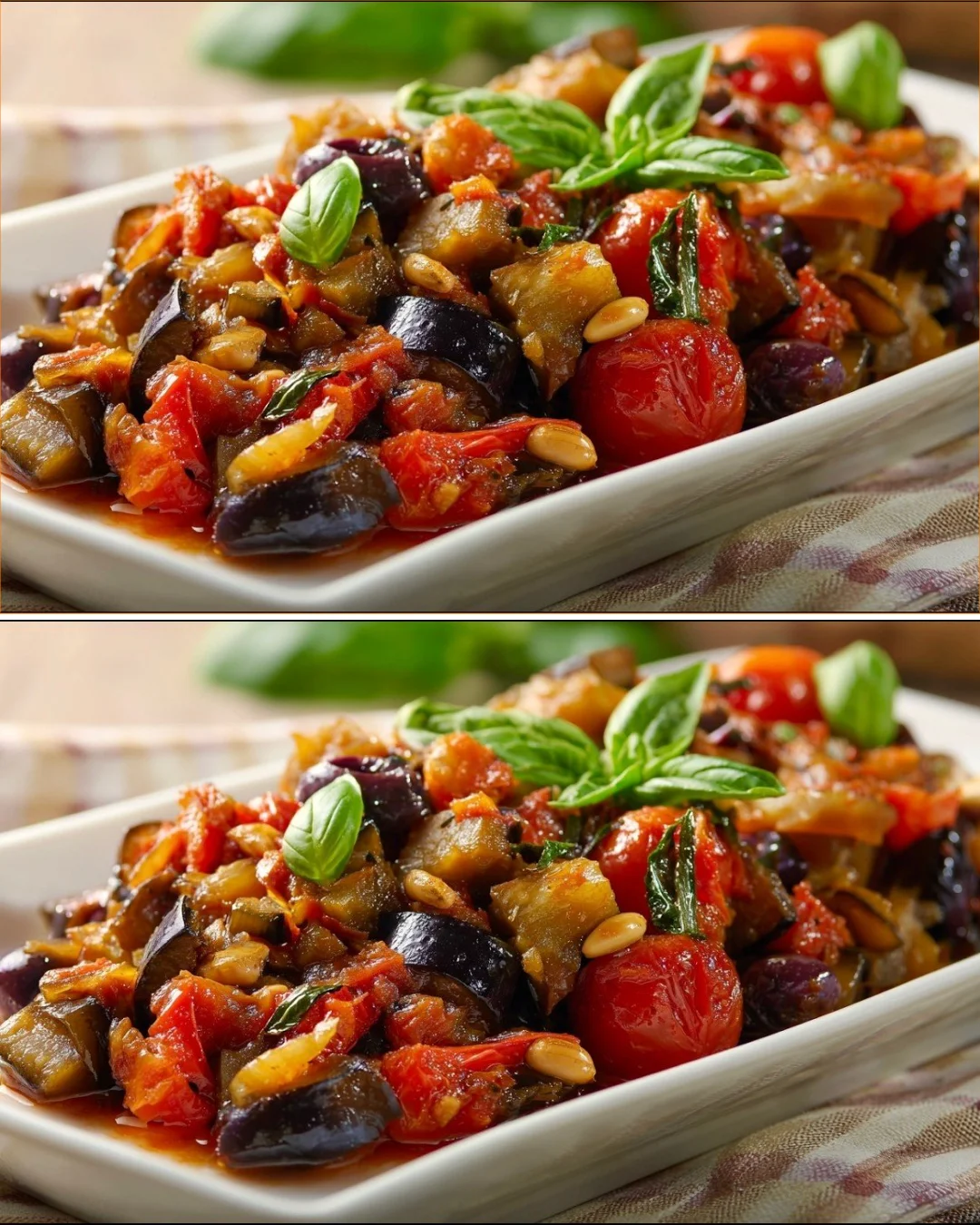
Sicilian eggplant caponata is having a moment again because it hits all the right notes: peak-summer eggplants, sweet tomatoes, briny olives and capers, and that signature sweet-and-sour (agrodolce) finish that tastes even better the next day. It’s the kind of make-ahead dish that fits everything from weeknight meal prep to a lazy weekend antipasto spread.
The first time I tested this method, I rushed the eggplant and ended up with pieces that were soft but a little pale. The second round, I browned the eggplant properly in batches and let the finished caponata rest before serving—completely different result: jammy vegetables, glossy sauce, and a cleaner sweet-sour balance. The small extra time is worth it.
Why You’ll Love This Recipe
- Classic sweet-and-sour Sicilian flavor without being overly sugary
- Eggplant turns deeply browned and silky (not watery) with a few key steps
- Tastes better after it sits—ideal for entertaining and meal prep
- Flexible: serve warm, room temp, or chilled
- Testing win: browning the eggplant in batches prevents steaming and improves texture noticeably
Ingredients
- 2 medium eggplants, cut into 1-inch (2.5 cm) cubes (about 2 lb / 900 g)
- 2 teaspoons kosher salt (10 g), plus more to taste
- 3 tablespoons olive oil (45 ml), plus more as needed for browning
- 1/3 cup pine nuts (40 g)
- 2 golden onions, diced (about 2 cups / 300 g)
- 3 celery stalks, diced (about 1 1/2 cups / 150 g)
- 1 1/2 cups cherry tomatoes, halved (250 g) or 1 1/2 cups chopped plum tomatoes (250 g)
- 1/3 cup pitted green olives, halved (50 g)
- 3 tablespoons capers, drained (40 g)
- 3 tablespoons white wine vinegar (45 ml)
- 2 tablespoons granulated sugar (25 g)
- 2 generous tablespoons tomato paste (about 40 g)
- 1/2 cup loosely packed basil leaves, torn (15 g)
- Optional: 2–4 tablespoons water (30–60 ml), only if the pan looks dry during simmering
Ingredient Notes
- Eggplant: Medium, firm eggplants with glossy skin are best. Salting briefly helps season the interior and reduces bitterness; you’ll still want to brown them well for that signature caponata depth.
- Pine nuts: Toast them separately—if you toast them in the same pan later, they can go from golden to burnt fast while you’re multitasking.
- Celery + onion: This base adds sweetness and crunch. Don’t rush it; a little golden color builds flavor.
- Tomatoes: Cherry tomatoes give a sweeter, brighter sauce; plum tomatoes taste more savory. Both work—use what looks good.
- Capers + olives: They bring the briny backbone. If your capers are very salty, give them a quick rinse and dry.
- Vinegar + sugar: This is the agrodolce. Add, simmer, and taste—your final balance should be sweet-sour with a savory tomato finish, not sharp vinegar.
Kitchen Tools Needed
- Large colander
- Sheet pan or large plate (for draining eggplant)
- Large skillet or sauté pan (12-inch / 30 cm preferred) with lid
- Small dry skillet (or use the same pan first) for toasting pine nuts
- Wooden spoon or spatula
- Chef’s knife + cutting board
- Measuring cups/spoons or kitchen scale
Step-by-Step Instructions
-
Salt and drain the eggplant (quick prep that helps texture).
Put the eggplant cubes in a colander and toss with 2 teaspoons (10 g) kosher salt. Let drain for 15 minutes.
After draining, pat the cubes dry with a clean towel or paper towels. (If you skip drying, the eggplant tends to steam instead of brown.) -
Toast the pine nuts.
In a dry skillet over medium heat, toast the pine nuts (40 g) for 3–5 minutes, stirring often, until golden and fragrant. Immediately transfer to a bowl so they don’t keep browning in the hot pan. -
Brown the eggplant in batches (the step most recipes underdo).
Heat 2 tablespoons olive oil (30 ml) in a large skillet over medium-high. Add about half the eggplant in a single layer. Cook 6–8 minutes, stirring only occasionally, until the cubes are well-browned on multiple sides and starting to feel tender.
Transfer to a plate and repeat with the remaining eggplant, adding the last 1 tablespoon olive oil (15 ml) (or a little more if the pan is dry).
Sensory cue: you want deep golden edges and a lightly creamy interior—not pale spongy cubes. -
Cook the onion and celery until sweet and glossy.
Lower heat to medium. In the same skillet, add onions and celery. Cook 8–10 minutes, stirring, until the onions turn translucent with light golden spots and the celery softens but still has a bit of bite. -
Add tomatoes, olives, and capers; simmer.
Stir in the tomatoes, olives, and capers. Cover and simmer on medium-low for 10–12 minutes, until the tomatoes collapse and the mixture looks saucy.
If the pan looks dry or the tomatoes aren’t releasing much juice, add 2–4 tablespoons (30–60 ml) water. -
Build the agrodolce sauce.
Stir in tomato paste (40 g) until it melts into the vegetables, about 1 minute. Add white wine vinegar (45 ml) and sugar (25 g). Simmer uncovered for 2–4 minutes, stirring, until the sharp vinegar smell softens and the sauce looks glossy. -
Return eggplant, finish, and rest.
Add the browned eggplant back to the skillet and fold gently to avoid mashing. Cook 2–3 minutes to heat through.
Turn off the heat and stir in torn basil (15 g) and the toasted pine nuts. Finish with a small drizzle of olive oil if you’d like.
Let it rest 15–20 minutes before serving—this noticeably smooths out the vinegar edge and helps everything meld.
Pro Tips (VERY IMPORTANT FOR RANKING)
- Brown in two batches: When I tried crowding the pan, the eggplant released moisture and turned soft without color. Batching gave me caramelized edges and better structure.
- Don’t skip drying after salting: Even a quick pat-down makes the difference between browning and steaming.
- Add tomato paste before vinegar: Letting the paste cook for a minute deepens flavor and prevents the sauce from tasting flat.
- Taste after resting: Right off the heat, the vinegar can seem harsh. After 15–20 minutes, it rounds out and tastes more balanced.
- Keep pine nuts separate until the end: Stirring them in early makes them lose crunch and they can taste oily.
- If it tastes “too sharp,” don’t add more sugar immediately: Give it 5 minutes of gentle simmering first to evaporate vinegar, then re-taste.
Common Mistakes to Avoid
- Overcrowding the eggplant: My first attempt did this and the eggplant went gray and spongey instead of browned.
- Cooking everything on high heat the whole time: The onion/celery need moderate heat to turn sweet without scorching.
- Adding basil too early: It turns dark and loses its fresh aroma—stir it in off heat.
- Skipping the rest time: The flavor won’t be as cohesive, and the sweet-sour balance can feel aggressive.
- Not adjusting salt at the end: Olives and capers vary a lot; final seasoning should happen after everything is in the pan.
Variations
- Raisins + parsley: Add 2 tablespoons (20 g) raisins with the tomatoes for a more traditional sweet note; swap basil for flat-leaf parsley.
- Spicy caponata: Add 1/4–1/2 teaspoon red pepper flakes (1–2 g) with the onions.
- Roasted eggplant version: Roast eggplant cubes at 425°F (220°C) for 25–30 minutes, tossing once, then proceed with the sauce on the stovetop.
- More vegetable-forward: Add 1 diced red bell pepper (about 150 g) with the onions and celery for extra sweetness and color.
Serving Suggestions
- Spoon over toasted crusty bread (bruschetta style) with a drizzle of olive oil
- Serve alongside grilled fish, roast chicken, or lamb
- Toss with warm pasta and a splash of pasta water for a quick sauce
- Build an antipasto plate with cheeses, cured meats, and marinated vegetables
- For a light meal, serve with a soft-boiled egg and greens
Storage Instructions
Let cool completely, then store in an airtight container in the refrigerator for up to 4 days. The flavor improves overnight, making it ideal for prepping ahead.
Reheating Tips
- Best: warm gently in a skillet over medium-low with a splash of water (1–2 tablespoons / 15–30 ml) just until heated through.
- Microwave: use medium power in short bursts, stirring in between to avoid hot spots.
- Also excellent at room temperature, which is often how it’s served in Sicily.
Nutrition Estimate
Per serving (about 1/6 of recipe):
- Calories: ~220
- Protein: ~4 g
- Carbs: ~18 g
- Fat: ~15 g
(Estimate will vary with exact oil absorption and brands of olives/capers.)
Recipe Summary Card
- Prep Time: 20 minutes
- Cook Time: 35 minutes
- Total Time: 55 minutes (plus 15–20 minutes resting recommended)
- Servings: 6
- Cuisine: Sicilian / Italian
- Course: Appetizer, Side dish
- Calories: ~220 per serving
Frequently Asked Questions
Can I make this ahead of time?
Yes—this is one of those dishes that tastes better after chilling overnight. Bring it to room temperature or warm gently before serving.
Do I have to peel the eggplant?
No. The skin helps the cubes hold their shape. If your eggplant skin is very thick (late-season or oversized eggplants), you can peel alternating stripes.
Why does my caponata taste too vinegary?
Usually it needs either a few more minutes of simmering to evaporate, or simply a rest. Taste again after 15–20 minutes before adjusting.
Can I use red wine vinegar instead of white wine vinegar?
You can, but it’s stronger and more tannic. Start with 2 tablespoons (30 ml), then add more to taste.
Is caponata served hot or cold?
Both work. I prefer it slightly warm or room temp so the flavors read more clearly and the olive oil stays aromatic.
Conclusion
This caponata is all about contrasts—sweet tomato, tangy vinegar, briny capers, and rich eggplant—pulled together into something that tastes like it took far more effort than it does. Make it once, and you’ll find excuses to keep a container in the fridge for sandwiches, salads, and last-minute appetizers.
Tested Note (VERY IMPORTANT)
I tested this again and got the best texture by browning the eggplant in two batches and letting the finished caponata rest 20 minutes before serving. The vinegar edge softened noticeably, and the vegetables stayed pleasantly chunky instead of collapsing.
Sicilian Eggplant Caponata
A classic Sicilian dish that combines peak-summer eggplants, sweet tomatoes, olives, and capers in a delightful sweet-and-sour sauce that improves in flavor after resting.
For the Caponata
- 2 medium eggplants, cut into 1-inch cubes (about 2 lb / 900 g) (Medium, firm eggplants with glossy skin are best.)
- 2 teaspoons kosher salt (10 g), plus more to taste (Salting briefly helps season the interior and reduces bitterness.)
- 3 tablespoons olive oil (45 ml), plus more as needed for browning (Use extra as needed for browning eggplant.)
- 1/3 cup pine nuts (40 g) (Toast them separately.)
- 1 1/2 cups cherry tomatoes, halved (250 g) or 1 1/2 cups chopped plum tomatoes (250 g) (Cherry tomatoes give a sweeter sauce.)
- 1/3 cup pitted green olives, halved (50 g) (Capers and olives bring a briny backbone.)
- 3 tablespoons capers, drained (40 g) (If very salty, rinse and dry.)
- 3 tablespoons white wine vinegar (45 ml) (This is part of the sweet-and-sour flavor balance.)
- 2 tablespoons granulated sugar (25 g) (Balances the vinegar in the sauce.)
- 2 generous tablespoons tomato paste (about 40 g) (Adding it first deepens flavor.)
- 1/2 cup loosely packed basil leaves, torn (15 g) (Add at the end to maintain freshness.)
- Optional: 2-4 tablespoons water (30-60 ml) (Add only if the pan looks dry during simmering.)
Preparation
- Salt and drain the eggplant. Put the eggplant cubes in a colander and toss with 2 teaspoons kosher salt. Let drain for 15 minutes.
- After draining, pat the cubes dry with a clean towel or paper towels.
Toasting Pine Nuts
- In a dry skillet over medium heat, toast the pine nuts for 3–5 minutes, stirring often, until golden and fragrant. Transfer to a bowl.
Browning Eggplant
- Heat 2 tablespoons olive oil in a large skillet over medium-high. Add half the eggplant in a single layer. Cook for 6–8 minutes, stirring occasionally until browned.
- Transfer to a plate, repeat with the remaining eggplant, adding another tablespoon of olive oil if the pan is dry.
Cooking Onion and Celery
- In the same skillet, lower heat to medium and add onions and celery. Cook 8–10 minutes, stirring until the onions turn translucent.
Simmering Mixture
- Stir in tomatoes, olives, and capers. Cover and simmer on medium-low for 10–12 minutes until the tomatoes collapse.
- If the pan looks dry, add 2–4 tablespoons water.
Building Agrodolce Sauce
- Stir in tomato paste until it melts into vegetables, about 1 minute. Add white wine vinegar and sugar. Simmer uncovered for 2–4 minutes, stirring until the vinegar smell softens.
Finishing and Resting
- Add the browned eggplant back to the skillet, cook for 2–3 minutes to heat through.
- Turn off heat and stir in torn basil and toasted pine nuts. Allow to rest for 15–20 minutes before serving.
Suitable for meal prep or entertaining. Tastes better after resting. Adjust salt after cooking, as olives and capers vary in saltiness.